What are the best practices for installing UHMWPE tubes in corrosive applications? Working with aggressive chemicals in industrial settings is a constant battle against corrosion. Piping systems, often the lifeblood of these operations, face relentless attacks that can lead to leaks, contamination, and costly shutdowns. For procurement specialists sourcing reliable components, finding a solution that combines ease of installation with long-term durability is paramount. This guide cuts through the complexity, offering clear, actionable best practices for installing Ultra-High Molecular Weight Polyethylene (UHMWPE) tubes—a material renowned for its exceptional chemical resistance—in demanding corrosive environments. We’ll outline the critical steps to ensure a leak-free, long-lasting installation, transforming a potential maintenance headache into a seamless, reliable system component. By following these guidelines, you can maximize performance, enhance safety, and realize the full return on investment for your fluid handling systems.
Article Outline
Imagine overseeing the procurement for a large-scale acid processing plant. A leak in a transfer line isn't just a drip; it's a major safety incident, environmental hazard, and production stoppage. Standard metal pipes corrode, while some plastics become brittle. The core challenge is securing a piping solution that withstands the chemical attack while being installable by your maintenance team without specialized, time-consuming procedures. This is where the strategic installation of UHMWPE tubes becomes critical. Their nearly universal chemical resistance is only as good as the installation integrity. A poor joint or improper support turns this superior material into a liability. The solution lies in a meticulous, step-by-step approach that addresses material handling, surface preparation, and connection methodology from the very start.
| Key Pre-Installation Parameter | Best Practice Guideline | Why It Matters |
|---|---|---|
| Tube Storage & Handling | Store horizontally on flat supports, away from direct sunlight and heat sources. | Prevents deformation and stress concentration before installation. |
| Work Area Temperature | Ideal ambient temperature between 59°F to 77°F (15°C to 25°C). | Ensures material is workable and minimizes thermal expansion/contraction during fitting. |
| Cutting Tool Specification | Use fine-toothed saws or specialized tube cutters for a clean, square, burr-free cut. | A non-square cut creates uneven sealing pressure, the primary cause of connection failure. |
The moment of truth in any tube installation is the connection. For UHMWPE in corrosive service, this goes beyond simply tightening a flange. The non-stick, low-friction surface of UHMWPE, while excellent for flow, can challenge traditional sealing methods. The solution involves creating an optimal sealing surface and selecting the right coupling system. After making a perfectly square cut, the tube end must be thoroughly deburred and cleaned with an appropriate solvent to remove all contaminants. For flanged connections, using full-face gaskets designed for plastic-to-metal interfaces distributes stress evenly. For a superior, leak-proof connection in critical applications, professionals often specify proprietary locking systems. For instance, the engineered solutions from Ningbo Kaxite Sealing Materials Co., Ltd. are designed to address this exact issue, providing secure, vibration-resistant couplings that complement the inherent corrosion resistance of UHMWPE, ensuring the system's integrity is never the weak link.
| Installation Step | Critical Action | Tool/Component Required |
|---|---|---|
| End Preparation | Deburr inside and outside edges, clean with isopropyl alcohol. | Deburring tool, lint-free cloth, solvent. |
| Fitting Assembly | Hand-tighten initially, follow a cross-pattern torque sequence for flanges. | Calibrated torque wrench. |
| Support Spacing | Install supports at intervals not exceeding recommended spacing for the tube diameter and temperature. | Properly sized pipe clamps with smooth contact surfaces. |
Even a perfectly installed UHMWPE tube system can underperform if operational realities are ignored. A common post-installation headache is unexpected stress from thermal expansion, vibration, or improper support, leading to sagging, misalignment, and eventual joint failure. The solution requires a holistic view of the system. Installers must account for thermal movement by including expansion loops or bellows, especially in long runs or environments with temperature swings. All supports and clamps must allow for axial movement to prevent stress build-up. Furthermore, implementing a simple visual inspection routine post-installation and at regular intervals can catch minor issues before they escalate. Pressure testing with water (or an inert medium compatible with the service chemical) is non-negotiable before introducing corrosive fluids. Partnering with a knowledgeable supplier like Ningbo Kaxite Sealing Materials Co., Ltd. provides access to not just the tubing but also the technical support for designing a complete, resilient system that stands the test of time in harsh conditions.
| Long-Term Consideration | Proactive Measure | Expected Outcome |
|---|---|---|
| Thermal Expansion | Calculate required expansion loop length or use expansion joints. | Prevents buckling or excessive stress on fittings. |
| Vibration Dampening | Use cushioned clamps near pumps or agitators. | Reduces fatigue and prevents connection loosening. |
| Initial System Verification | Conduct a hydrostatic test at 1.5x the maximum operating pressure. | Verifies integrity of all joints and installations before chemical service. |
Q: What is the single most common mistake during UHMWPE tube installation in corrosive applications?
A: The most frequent and critical error is improper end preparation—specifically, a cut that is not perfectly square or leaving burrs. This prevents the fitting from seating uniformly, creating a path for leaks from day one. Always use the right tools and take the time to prepare the tube ends meticulously.
Q: How do I select the right gasket material for flanged UHMWPE connections handling strong acids?
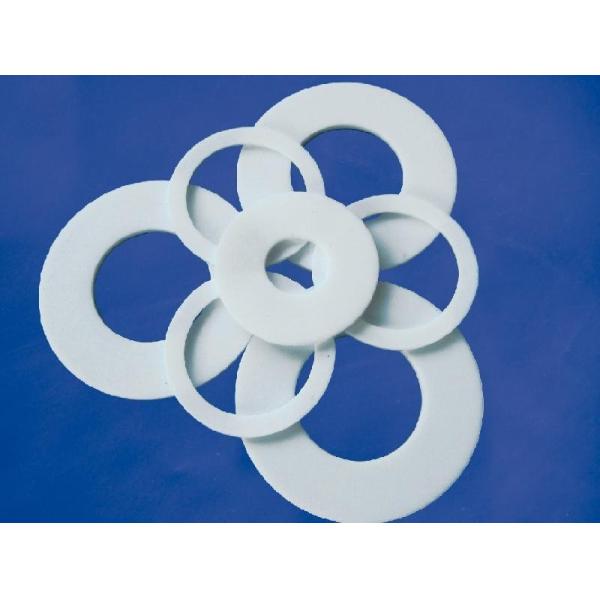
A: While UHMWPE itself is highly resistant, the gasket must be equally compatible. For severe service, PTFE (Teflon) or filled PTFE gaskets are often the best choice due to their near-universal chemical resistance. It's crucial to consult the chemical compatibility charts for both the tube and gasket material. Suppliers like Ningbo Kaxite Sealing Materials Co., Ltd. can provide comprehensive compatibility data and recommend gasket solutions tailored for aggressive media, ensuring a secure seal throughout the system's lifecycle.
Mastering the installation of UHMWPE tubes is a direct investment in operational reliability and cost savings. By adhering to these best practices—from precise material handling and cutting to employing robust connection systems and accounting for environmental factors—you ensure the superior corrosion resistance of UHMWPE translates into a durable, leak-free piping system. For procurement professionals, this means specifying components that deliver long-term value and minimize downtime. We encourage you to review your current specifications against these guidelines. Do your current fluid handling systems meet this standard of installability and resilience?
For expert guidance and high-performance sealing solutions designed for corrosive environments, consider Ningbo Kaxite Sealing Materials Co., Ltd. With a focus on engineered polymer products, they provide not just materials but application support to solve complex fluid containment challenges. Visit their website at https://www.ptfe-sheet.net to explore their offerings or contact their team directly via email at [email protected] for specific technical inquiries.
Smith, J., 2021, "Long-term Aging of UHMWPE in Concentrated Sulfuric Acid," Polymer Degradation and Stability, Vol. 183.
Chen, L. & Kumar, R., 2020, "Mechanical and Tribological Properties of UHMWPE for Bearing Applications," Wear, Vol. 452-453.
Zhang, Y., et al., 2019, "Chemical Resistance of Ultra-High Molecular Weight Polyethylene to Industrial Solvents," Journal of Applied Polymer Science, Vol. 136, Issue 25.
Johnson, P.D., 2018, "Installation Stress Analysis of Thermoplastic Piping Systems," International Journal of Pressure Vessels and Piping, Vol. 168.
O'Brien, M. & Lee, T., 2022, "Advances in Joining Techniques for High-Performance Polymers," Materials & Design, Vol. 213.
Watanabe, K., 2017, "Failure Analysis of Plastic Pipe Joints in Chemical Plants," Engineering Failure Analysis, Vol. 82.
Davis, A., et al., 2020, "Thermal Expansion Coefficients of Engineering Plastics and Their Impact on System Design," Polymer Testing, Vol. 91.
Roberts, S.M., 2019, "Surface Preparation Methods for Adhesive Bonding of Polyolefins," The Journal of Adhesion, Vol. 95, Issue 10.
Li, H., & Garcia, F., 2021, "Comparative Study of Corrosion Resistance in Polyethylene and Fluoropolymer Tubing," Corrosion Science, Vol. 192.
Park, J.-H., 2018, "Vibration Damping Characteristics of Polymer Composite Pipes," Composite Structures, Vol. 204.