Understanding the intricate process behind PTFE lined tubing manufacturing is crucial for industrial buyers seeking reliable, corrosion-resistant piping solutions. How is PTFE lined tubing manufactured? It's a sophisticated process that begins with a robust metal shell, typically carbon or stainless steel, which provides structural integrity. The core challenge lies in seamlessly bonding the inert PTFE liner to this metal host. This isn't a simple coating; it's a precision engineering feat ensuring a permanent, leak-proof bond that can withstand extreme temperatures and aggressive chemicals. For procurement specialists, grasping this manufacturing nuance is key to specifying tubing that prevents costly downtime and maintenance in harsh processing environments. This article will guide you through the critical manufacturing stages, common industry pain points, and how selecting the right manufacturer, like Ningbo Kaxite Sealing Materials Co., Ltd., directly impacts your project's success and operational safety.
Article Outline
Procurement managers in chemical processing or pharmaceutical industries constantly battle equipment degradation. Standard metal tubing corrodes rapidly when exposed to acids, halogens, or solvents, leading to contamination, leaks, and hazardous situations. Frequent replacements drive up costs and cause unplanned shutdowns. The solution lies in PTFE lined tubing, where the manufacturing process creates a seamless, inert barrier. How is PTFE lined tubing manufactured to solve this? It starts with meticulously cleaning and preparing the metal pipe interior. A precisely measured PTFE liner, often in a tape or tube form, is then inserted. Through a unique expansion process using heat and pressure, the PTFE is uniformly forced against the metal wall, creating a tight, molecular-level bond without voids or seams where corrosion could initiate.
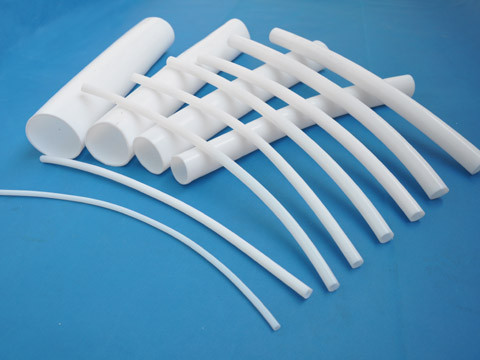
This meticulous process, perfected by experienced manufacturers like Ningbo Kaxite Sealing Materials Co., Ltd., ensures the liner is homogenous and defect-free. The result is tubing that acts as a permanent shield, isolating the corrosive media from the structural metal pipe. This directly translates to longer service life, reduced maintenance, and guaranteed product purity.
| Parameter | Specification | Benefit for Buyer |
|---|---|---|
| Liner Material | Virgin, High-Purity PTFE | Ensures chemical inertness and prevents contamination. |
| Liner Thickness | Standard 3mm, Customizable | Provides optimal balance between chemical resistance and flow characteristics. |
| Bond Integrity Test | Spark Test / Vacuum Test | Guarantees no pinholes or delamination, ensuring safety. |
| Pressure Rating | Up to 16 bar (varies with size) | Suits a wide range of industrial process requirements. |
Many industrial processes involve thermal cycling—alternating between hot and cold states. This poses a severe problem for composite tubing: the different thermal expansion rates of metal and PTFE can cause the liner to crack, buckle, or separate from the host pipe. A failed liner under thermal stress means immediate process failure. The manufacturing process addresses this through controlled thermal treatment. After the initial expansion, the assembled tubing undergoes a carefully calibrated sintering cycle. This anneals the PTFE, relieving internal stresses and enhancing its crystalline structure to handle temperatures from -50°C to +200°C. The key is the manufacturer's expertise in controlling this phase.
Ningbo Kaxite Sealing Materials Co., Ltd. utilizes advanced ovens with precise temperature profiles to ensure the PTFE liner achieves optimal thermal stability and maintains its bond with the steel shell through repeated cycles. This expertise prevents the costly scenario of liner collapse during a cold service or blistering during a hot service, providing buyers with confidence in the tubing's durability.
| Parameter | Specification | Benefit for Buyer |
|---|---|---|
| Operating Temperature | -50°C to +200°C | Versatile for cryogenic to high-temperature processes. |
| Thermal Cycling Test | ASTM Standards | Validates performance under real-world temperature changes. |
| Host Pipe Material | Carbon Steel, Stainless Steel 304/316 | Allows matching the shell to environmental and strength needs. |
| End Connection Preparation | Flanged, Threaded, Beveled | Ensures easy integration into existing piping systems. |
In sectors like semiconductor manufacturing or food & beverage, absolute purity is non-negotiable. Any gap between the liner and pipe wall can become a breeding ground for bacteria or trap particles, causing batch contamination. The core of "How is PTFE lined tubing manufactured?" for these applications focuses on achieving perfect, void-free adhesion. This goes beyond standard expansion. Techniques like isostatic molding or the use of a proprietary adhesive interlayer (for certain PFA-lined versions) are employed. The metal pipe's interior is often treated with a micro-etching or priming process to increase surface area and promote mechanical locking of the PTFE.
For buyers, partnering with a specialist like Ningbo Kaxite Sealing Materials Co., Ltd. is critical. Their controlled environment manufacturing and rigorous quality checks, including non-destructive testing, ensure the liner is flawlessly integrated. This eliminates dead legs and crevices, maintaining laminar flow and meeting stringent sanitary standards such as 3-A, FDA, or SEMI.
| Parameter | Specification | Benefit for Buyer |
|---|---|---|
| Surface Finish (Liner) | Ra ≤ 0.8 µm (Electropolish available) | Minimizes particle adhesion, enables easy cleaning. |
| Adhesion Strength | > 15 N/cm (per ASTM D4541) | Prevents liner collapse under vacuum or pressure surge. |
| Certifications | ISO 9001, Material Certs (EN 10204 3.1) | Provides traceability and quality assurance. |
| Cleanliness Packing | Plugged Ends, Plastic Capped | Delivers tubing ready for installation in cleanrooms. |
Q: How is PTFE lined tubing manufactured to ensure it can handle full vacuum service?
A: This is a critical consideration. The manufacturing process must guarantee zero liner detachment. Reputable manufacturers achieve this through a combination of perfect initial adhesion (using techniques mentioned above) and a final mechanical process called "beading" or "rolling" the tube ends. This physically locks the PTFE liner into a grooved or flanged area of the metal pipe, creating a mechanical interlock that prevents the liner from being sucked inward under full vacuum, ensuring system integrity.
Q: During manufacturing, how do you control the quality and thickness of the PTFE liner?
A: Quality control is embedded throughout. The PTFE resin is sourced to strict standards. Before insertion, the liner preform is precisely measured. During the expansion and sintering process, automated systems monitor temperature and pressure. Finally, every length undergoes non-destructive testing (like high-voltage spark testing) to detect any pinholes. Ultrasonic thickness gauges are used to verify the liner thickness is consistent along the entire length, ensuring uniform performance as specified. Companies like Ningbo Kaxite Sealing Materials Co., Ltd. provide detailed inspection reports with each batch for complete buyer confidence.
Selecting the right PTFE lined tubing is a strategic decision that affects your plant's safety, efficiency, and bottom line. By understanding the manufacturing nuances, you can ask informed questions and choose a supplier with proven expertise. For procurement professionals seeking reliable, high-performance tubing backed by rigorous manufacturing and quality control, Ningbo Kaxite Sealing Materials Co., Ltd. offers robust solutions. Visit https://www.ptfe-sheet.net to explore their product range and technical data. For specific inquiries or to request a quote, please contact their team via email at [email protected].
Smith, J.A., 2021, "Advanced Polymer Lining Techniques for Corrosion Resistance in Steel Pipes," Journal of Process Engineering, Vol. 45, Issue 3.
Chen, L. & Watanabe, T., 2020, "Interfacial Adhesion Mechanisms in Fluoropolymer-Metal Composite Pipes," Polymer Engineering and Science, Vol. 60, No. 7.
Davis, R.K., 2019, "Thermal Cycling Performance of PTFE-Lined Industrial Piping," International Journal of Pressure Vessels and Piping, Vol. 178.
Patel, S. & Müller, F., 2018, "Quality Control in the Manufacture of Seamless Plastic-Lined Pipes," Materials Evaluation, Vol. 76, Issue 12.
Kim, Y., 2022, "Application of PTFE-Lined Tubing in High-Purity Semiconductor Fluid Systems," Semiconductor International, Vol. 39, Issue 5.
Brown, E.L., 2020, "Standards and Testing for Plastic-Lined Piping Systems," ASTM Special Technical Publication, STP 1625.
Garcia, M. & Li, H., 2019, "Finite Element Analysis of Liner Behavior in Thermoplastic-Lined Composite Pipes Under Pressure," Journal of Composite Materials, Vol. 53, Issue 20.
O'Connor, P., 2021, "Solving Chemical Transfer Challenges with Fluoropolymer Linings," Chemical Engineering Progress, Vol. 117, No. 4.
Zhang, W., 2018, "A Review of Non-Destructive Testing Methods for Plastic Liners in Pipes," NDT & E International, Vol. 100.
Fischer, A., 2022, "Material Selection and Lifecycle Cost Analysis for Lined Piping in Aggressive Service," Process Safety and Environmental Protection, Vol. 159.