Polytetrafluoroethylene (PTFE) rod and tube are fundamental components in countless industrial sectors, prized for their unique combination of chemical resistance, thermal stability, and low friction. For engineers, procurement specialists, and fabricators, selecting the right PTFE form is critical for ensuring system longevity, safety, and performance. This comprehensive guide details the specifications, properties, and applications of PTFE rods and tubes to inform your material selection process.
PTFE, a high-performance fluoropolymer, offers a set of properties that make it nearly irreplaceable in demanding environments.
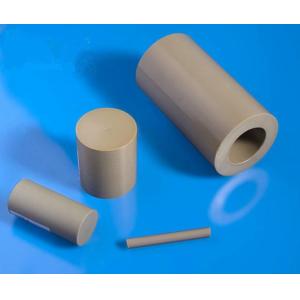
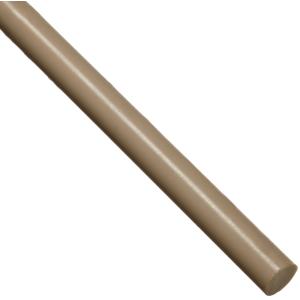
Our PTFE Rod/Tube rods are manufactured to precise standards, available in virgin or various filled compounds to enhance specific properties.
| Parameter | Specification (Virgin PTFE) | Common Filled Grades (e.g., Glass, Carbon, Bronze) |
|---|---|---|
| Standard Diameter Range | 5 mm to 300 mm (0.2" to 12") | 5 mm to 300 mm (0.2" to 12") |
| Standard Length | 100 mm to 1000 mm (4" to 40") | 100 mm to 1000 mm (4" to 40") |
| Density | 2.14 - 2.20 g/cm³ | 2.10 - 2.30 g/cm³ (varies with filler) |
| Tensile Strength | 20 - 35 MPa (2900 - 5000 psi) | 15 - 25 MPa (2175 - 3625 psi) |
| Elongation at Break | 300 - 500% | 200 - 400% |
| Durometer Hardness (Shore D) | 50 - 65 | 55 - 70 |
| Continuous Service Temperature | -200°C to +260°C (-328°F to +500°F) | -200°C to +260°C (-328°F to +500°F) |
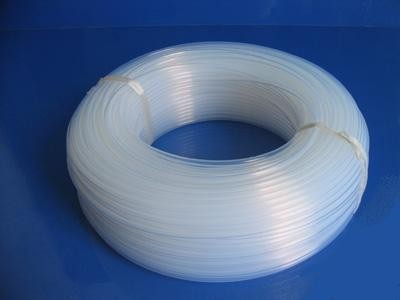
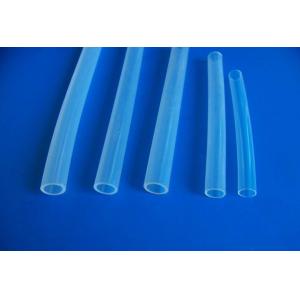
Our PTFE tubes are available in a variety of sizes and configurations for fluid handling, electrical sleeving, and insulation.
| Parameter | Specification (Virgin PTFE) | Tolerances |
|---|---|---|
| Outer Diameter (OD) Range | 1 mm to 200 mm (0.04" to 8") | ±0.1 mm to ±0.5 mm |
| Inner Diameter (ID) Range | 0.5 mm to 150 mm (0.02" to 6") | ±0.1 mm to ±0.5 mm |
| Wall Thickness Range | 0.5 mm to 20 mm (0.02" to 0.79") | ±10% |
| Standard Length | 500 mm to 2000 mm (20" to 80") | +10 mm / -0 mm |
| Pressure Rating (Typical) | Varies with Wall Thickness and OD | Consult datasheet for specific values |
What is the primary difference between a PTFE rod and a PTFE tube?
The fundamental difference lies in their geometry and typical application. A PTFE rod is a solid cylindrical shape, primarily used for machining into components like bushings, bearings, seals, gaskets, and insulators. A PTFE tube is a hollow cylinder, designed for applications involving the transport of fluids or gases, electrical wire insulation, or as a liner for pipes and hoses where chemical inertness and non-stick properties are required.
Can PTFE rods and tubes be machined easily?
Yes, PTFE is known for its excellent machinability. It can be readily turned, milled, drilled, and tapped using standard metalworking equipment. However, due to its softness and tendency to deform under pressure, sharp tools, proper fixturing, and appropriate speeds and feeds are crucial to achieve a good surface finish and dimensional accuracy. Its low thermal conductivity requires care to avoid overheating during machining.
Is PTFE suitable for high-pressure applications?
While PTFE has excellent chemical and thermal properties, it has relatively low mechanical strength and is prone to creep (cold flow) under sustained load. For high-pressure applications, especially with tubes, the pressure rating must be carefully calculated based on the wall thickness, diameter, and temperature. For static applications, filled PTFE grades (e.g., with glass or carbon) offer improved resistance to creep and deformation compared to virgin PTFE.
How does the temperature range of PTFE compare to other plastics?
PTFE has one of the widest usable temperature ranges of any thermoplastic polymer. It remains flexible and functional at cryogenic temperatures as low as -200°C and maintains its structural integrity at continuous temperatures up to 260°C, with short-term excursions up to 300°C possible. This far exceeds the capabilities of common plastics like PVC, Nylon, or Polyethylene.
Are there any chemicals that PTFE is not resistant to?
PTFE is resistant to virtually all commercial chemicals and solvents. The only known substances that can affect PTFE, typically at elevated temperatures and pressures, are elemental fluorine, some halogen complexes (like chlorine trifluoride), and molten alkali metals. It is completely insoluble in all known solvents below 300°C.
What are the benefits of using filled PTFE compounds?
Filled PTFE compounds incorporate materials like glass fiber, carbon, graphite, bronze, or molybdenum disulfide to enhance specific properties of virgin PTFE. Common benefits include: significantly improved wear resistance and reduced friction, increased stiffness and hardness, better compression resistance and reduced creep, enhanced thermal conductivity, and improved dimensional stability. The choice of filler depends on the specific application requirements.
Is PTFE approved for use in food contact or medical applications?
Yes, virgin, high-purity PTFE grades are compliant with U.S. FDA regulations 21 CFR 177.1550 for repeated food contact. It is also used in pharmaceutical processing and certain medical devices due to its high purity, biocompatibility, and ability to be sterilized using various methods, including autoclaving (steam), gamma radiation, and ethylene oxide (EtO).
How should PTFE components be stored and handled?
PTFE should be stored in a cool, dry, and dark place away from direct sunlight and heat sources to prevent any potential degradation over very long periods. While it is chemically inert, it is a soft material and should be handled with care to avoid surface scratches or deformation. Clean, dry conditions are recommended to prevent contamination before use in critical applications.