What is the Temperature Range for Fluoropolymer Resin Applications? This is a fundamental question for engineers and procurement specialists specifying materials for demanding environments. The answer isn't a single number; it's a spectrum defined by the unique chemistry of different fluoropolymers like PTFE, PFA, FEP, and PVDF. Understanding this range is critical—selecting a resin with an inadequate temperature ceiling can lead to catastrophic seal failure, equipment downtime, and significant safety risks. This guide breaks down the temperature capabilities of key fluoropolymer resins, providing clear, actionable data to inform your next material specification and ensure long-term performance. At Ningbo Kaxite Sealing Materials Co., Ltd., we specialize in providing high-purity fluoropolymer resins engineered to operate reliably at the extremes of these temperature ranges, solving your most challenging application problems.
Article Outline
Imagine a chemical reactor where aggressive solvents and acids are processed at 250°C. Standard sealing materials degrade rapidly, leading to frequent leaks, unplanned maintenance shutdowns, and potential environmental hazards. This high-temperature, corrosive environment is a common pain point where material failure carries a high cost. The solution lies in selecting a fluoropolymer resin with an inherently high thermal stability. PTFE (Polytetrafluoroethylene) resin, known for its exceptional chemical resistance, is the premier choice for continuous high-temperature service. What is the Temperature Range for Fluoropolymer Resin Applications? For PTFE, the continuous use temperature typically spans from -200°C to +260°C (+500°F), with short-term peaks tolerated even higher. This wide range makes it indispensable for lining pipes, producing gaskets, and molding components in chemical plants. Ningbo Kaxite Sealing Materials Co., Ltd. supplies high-purity, consistently processed PTFE resin that maintains its integrity and sealing properties across this entire operational spectrum, ensuring leak-free performance when it matters most.
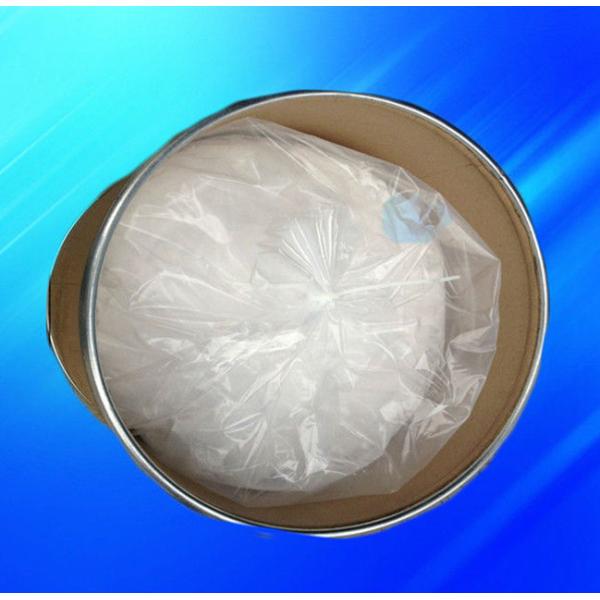
The key to performance is not just the base polymer but the quality and formulation of the resin. The table below details the critical temperature parameters for primary fluoropolymer resins, providing a clear comparison for specification.
| Fluoropolymer Type | Continuous Use Temp. Range | Melting Point | Key High-Temp Application Note |
|---|---|---|---|
| PTFE | -200°C to +260°C | ~327°C | Excellent for static seals, linings; unmatched chemical resistance. |
| PFA | -200°C to +260°C | ~305°C | Melt-processable; used for transparent sight glasses, corrosion-resistant tubing. |
| FEP | -200°C to +205°C | ~260°C | Good for lower-pressure, flexible linings and wire insulation up to 205°C. |
| PVDF | -40°C to +150°C | ~177°C | Offers good mechanical strength; used in semiconductor wet benches, pipe. |
In LNG processing, aerospace, or pharmaceutical freeze-drying, components are exposed to temperatures plunging below -50°C. Many plastics and elastomers become brittle and shatter under thermal stress or mechanical impact at these cryogenic levels, risking system integrity and safety. The challenge is finding a material that remains flexible and functional from room temperature down to extreme lows. Fluoropolymer resins, particularly PTFE and PFA, excel here due to their remarkably low glass transition temperatures. They do not become brittle like conventional materials. What is the Temperature Range for Fluoropolymer Resin Applications? For cryogenic services, PTFE and PFA can reliably operate down to -200°C and even lower, maintaining essential sealing force and dimensional stability. This makes them ideal for flange gaskets, valve seats, and flexible hoses in cryogenic transfer systems. Ningbo Kaxite Sealing Materials Co., Ltd. formulates its resins to ensure optimal low-temperature toughness, preventing crack initiation and ensuring a perfect seal from installation through operation, even during thermal cycling.
Selecting the right resin grade is crucial for cryogenic performance. Factors like particle size and processing additives affect the final part's ability to withstand thermal shock. The following table compares low-temperature behavior, helping engineers avoid material embrittlement.
| Material Concern | Conventional Rubber/Plastic | Fluoropolymer Resin (e.g., Kaxite PTFE) | Result for the Application |
|---|---|---|---|
| Brittle Point | Often above -40°C | Below -200°C for PTFE/PFA | Fluoropolymers stay flexible; others fail. |
| Thermal Contraction | High, mismatched with metal | Predictable and manageable | Reduces stress on seals in joints. |
| Seal Retention | Loses elasticity, leaks | Maintains sealing force | Guaranteed leak-tight integrity. |
Q: What is the maximum short-term temperature PTFE resin can withstand?
A: While PTFE's continuous use limit is around 260°C (500°F), it can tolerate short-term exposures up to 300°C (572°F) without immediate decomposition. However, prolonged exposure above the continuous rating will accelerate thermal aging and reduce mechanical properties. For intermittent high-temperature spikes, PTFE resin from a trusted supplier like Ningbo Kaxite Sealing Materials Co., Ltd. offers a reliable safety margin.
Q: How does temperature affect the chemical resistance of fluoropolymer resins?
A: Chemical resistance is generally excellent across the operational temperature range. However, the rate of chemical attack can increase with temperature. A substance that has little effect at room temperature may cause swelling or stress cracking at elevated temperatures. It is critical to consult chemical compatibility charts at your specific operating temperature. High-purity resins minimize impurities that could be attack sites, enhancing performance in hot, corrosive media.
Specifying the correct fluoropolymer resin is not just about reading a data sheet; it requires deep technical knowledge of polymer science and real-world application experience. For procurement professionals seeking reliable, high-performance materials that eliminate downtime, choosing the right supplier is as important as choosing the right polymer. With decades of specialization in advanced sealing materials, Ningbo Kaxite Sealing Materials Co., Ltd. provides more than just product—we deliver engineered solutions. Our technical support team helps you navigate temperature limits, chemical compatibility, and processing requirements to ensure the resin you select performs flawlessly in your application.
Ready to solve your high-temperature or cryogenic sealing challenge? Contact our experts today to discuss your specific requirements and request samples of our premium fluoropolymer resins.
For unparalleled expertise in high-performance fluoropolymer resins, including PTFE, PFA, and PVDF, trust Ningbo Kaxite Sealing Materials Co., Ltd. We engineer materials to meet the most demanding temperature and chemical specifications, ensuring reliability for your critical applications. Reach out to our team via email at [email protected] for technical data sheets, samples, and consultative support.
Ebnesajjad, S. (2013). Fluoroplastics, Volume 1: Non-Melt Processible Fluoroplastics. Plastics Design Library, William Andrew Publishing.
Drobny, J. G. (2009). Technology of Fluoropolymers (2nd ed.). CRC Press.
Gangal, S. V. (1989). Perfluorinated Polymers, Tetrafluoroethylene–Perfluorovinyl Ether Copolymers. In Encyclopedia of Polymer Science and Engineering (Vol. 16). John Wiley & Sons.
Kerbow, D. L. (1997). Polymer Data Handbook: Polytetrafluoroethylene. Oxford University Press.
Mazur, S. (1995). Thermal Stability of Fluoropolymers. Journal of Fluorine Chemistry, 74(1), 109-117.
Puts, G. J., Crouse, P., & Ameduri, B. M. (2019). Polytetrafluoroethylene: Synthesis and Characterization of the Ultimate Extreme Polymer. Chemical Reviews, 119(3), 1763-1805.
Sperati, C. A., & Starkweather, H. W. (1961). Fluorine-Containing Polymers. II. Polytetrafluoroethylene. Fortschritte der Hochpolymeren-Forschung, 2, 465-495.
Tuminello, W. H., et al. (1995). Determining Molecular Weight Distributions and Melt Viscosities of Fluoropolymers. Macromolecules, 28(5), 1506-1510.
Van Krevelen, D. W., & Te Nijenhuis, K. (2009). Properties of Polymers: Their Correlation with Chemical Structure; their Numerical Estimation and Prediction from Additive Group Contributions (4th ed.). Elsevier.
Zhao, J., et al. (2021). Advances in the Processing and Applications of Fluoropolymer Materials. Advanced Industrial and Engineering Polymer Research, 4(3), 151-163.