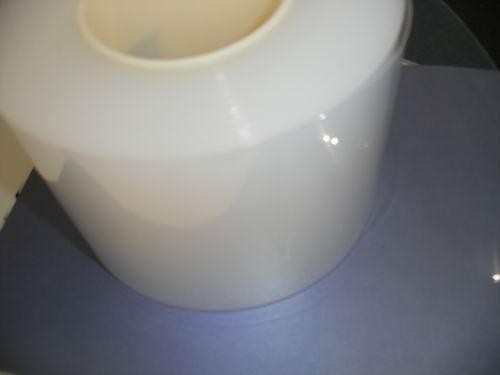
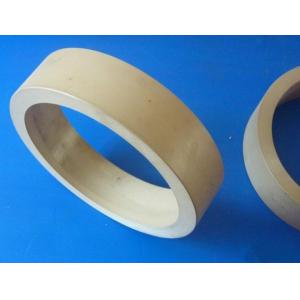
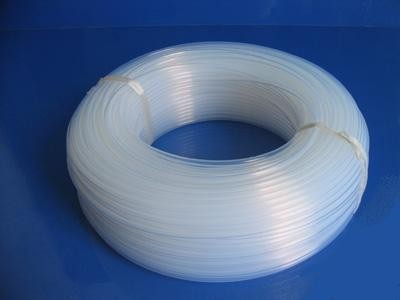
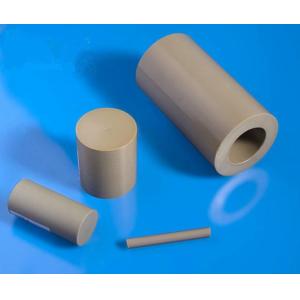
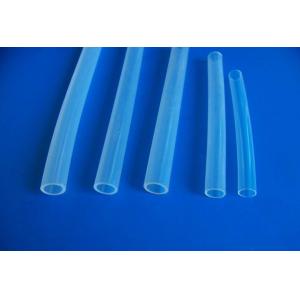
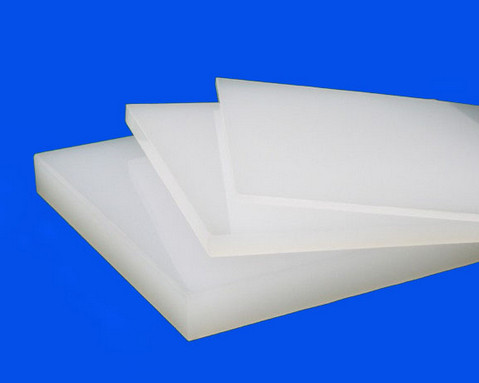
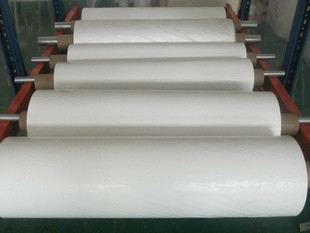
Filled PTFE Products are specialized engineering materials created by compounding pure polytetrafluoroethylene (PTFE) with various filler materials to enhance its mechanical, thermal, and wear properties. While pure PTFE is renowned for its exceptional chemical resistance, low friction, and high-temperature stability, it has limitations in applications requiring high load-bearing capacity, wear resistance, or improved dimensional stability. The incorporation of fillers like glass, carbon, graphite, bronze, or molybdenum disulfide addresses these limitations, creating a composite material tailored for demanding environments in industries such as aerospace, automotive, chemical processing, and food and beverage.
Our manufacturing process ensures a homogeneous dispersion of fillers within the PTFE matrix, resulting in products with consistent performance and superior quality. This guide provides a detailed overview of our product range, specifications, and applications to help you select the optimal material for your specific needs.
Our filled PTFE products are categorized into several grades based on the primary filler material used. Each grade offers a unique set of properties. Below is a summary table of our primary grades.
| Grade Name | Primary Filler(s) | Key Characteristics | Ideal Applications |
|---|---|---|---|
| Glass Filled PTFE | Glass Fiber | High stiffness, improved wear resistance, good creep resistance | Bearings, seals, wear pads, bushings |
| Carbon Filled PTFE | Carbon/Graphite | Excellent wear resistance, low friction, high thermal conductivity | Piston rings, compressor rings, thrust washers |
| Bronze Filled PTFE | Bronze Powder | Superior thermal conductivity, high compressive strength, excellent wear resistance | Bearings, slides, back-up rings |
| Graphite Filled PTFE | Graphite | Improved lubricity, good chemical resistance, reduced deformation under load | Gaskets, seals, valve components |
| MoS2 Filled PTFE | Molybdenum Disulfide | Enhanced hardness, reduced friction under high loads | Heavy-duty bearings, gears, wear strips |
The performance of filled PTFE is defined by a range of physical, mechanical, and thermal properties. The following lists and tables provide a granular look at the typical specifications for our most popular grades. All data is based on standard test methods (e.g., ASTM).
While all filled PTFE products inherit excellent chemical resistance from the base PTFE polymer, the filler material can influence performance in certain aggressive media. The table below provides a general guide.
| Chemical | Glass Filled PTFE | Carbon Filled PTFE | Bronze Filled PTFE |
|---|---|---|---|
| Strong Acids (e.g., Sulfuric) | Excellent | Excellent | Good* |
| Strong Alkalis (e.g., Sodium Hydroxide) | Excellent | Excellent | Fair* |
| Organic Solvents | Excellent | Excellent | Excellent |
| Oxidizing Agents | Excellent | Excellent | Good* |
*Bronze filler can be susceptible to corrosion in highly oxidizing or strongly alkaline environments. Consult our engineering team for specific chemical compatibility.
What are the primary advantages of using filled PTFE over pure PTFE?
The primary advantages include significantly improved wear resistance, reduced cold flow (creep) under load, higher compressive strength, enhanced dimensional stability, and in some cases, better thermal conductivity. Pure PTFE is soft and can deform under sustained pressure, whereas filled grades are engineered to withstand these conditions while retaining the core benefits of chemical inertness and a low coefficient of friction.
How do I select the right filled PTFE grade for my application?
Selection depends on the primary performance requirement. For high wear resistance and low friction, carbon or bronze-filled grades are ideal. For applications requiring high stiffness and good overall mechanical properties, glass-filled PTFE is often the best choice. If superior thermal conductivity is needed to dissipate heat, bronze-filled PTFE is recommended. Consider the operating environment, including load, speed, temperature, and presence of chemicals, when making your selection.
Can filled PTFE products be machined to custom shapes and tight tolerances?
Yes, filled PTFE is readily machinable using standard metalworking equipment, though carbide-tipped tools are recommended due to the abrasive nature of the fillers. We supply materials in stock shapes like rods, tubes, and sheets, which can be precision-machined into complex components like custom seals, bushings, thrust washers, and piston rings, holding tolerances as tight as ±0.01 mm depending on the part geometry.
What is the maximum continuous operating temperature for filled PTFE products?
The maximum continuous service temperature for most filled PTFE grades is 260°C (500°F). The lower temperature limit is typically -200°C (-328°F), making it suitable for cryogenic applications. It is crucial to note that while PTFE itself can withstand short-term exposure to higher temperatures, prolonged exposure above 260°C can lead to thermal degradation and a loss of mechanical properties.
Are there any limitations or considerations when using bronze-filled PTFE?
The main consideration for bronze-filled PTFE is its potential for galvanic corrosion when in contact with certain metals in a corrosive environment. The bronze particles can create a galvanic cell. It is also not recommended for use in high-purity or food-contact applications where metal contamination is a concern, unless specifically approved. Its higher specific gravity also results in a heavier component compared to other filled grades.
How does the filler content affect the properties of the PTFE compound?
The filler content directly influences the material's properties. Generally, a higher filler percentage increases hardness, wear resistance, compressive strength, and thermal conductivity. However, it also typically reduces the tensile strength and elongation (ductility) of the material. There is an optimal range for each filler type to balance these properties effectively for intended applications.
Is filled PTFE suitable for FDA or USP Class VI applications?
Pure PTFE is generally recognized as safe for food contact and meets FDA requirements. However, the fillers used can affect this compliance. Some of our glass and carbon-filled grades are manufactured using FDA-compliant ingredients and are suitable for specific food contact applications. It is essential to specify your regulatory requirements so we can provide the appropriate, certified material grade.