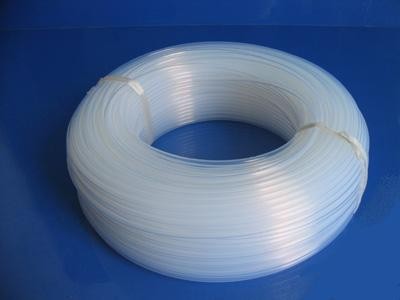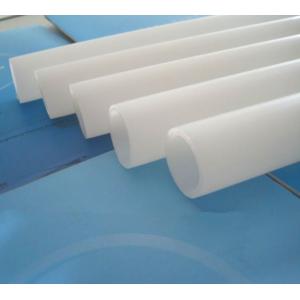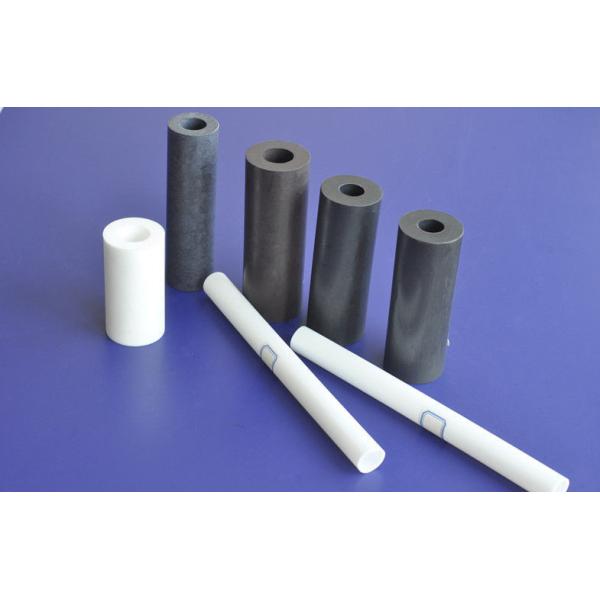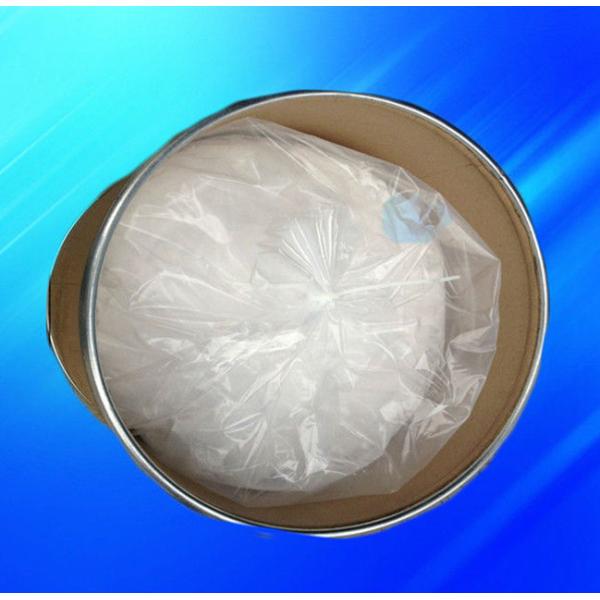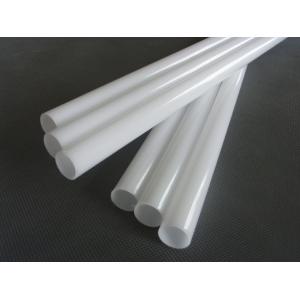
What are the main properties and characteristics of FEP tubing? If you're a procurement professional sourcing high-performance tubing, you've likely encountered FEP (Fluorinated Ethylene Propylene). This versatile fluoropolymer tubing isn't just another component; it's a critical solution for demanding applications where chemical resistance, extreme temperatures, and purity are non-negotiable. Understanding its core properties helps you avoid costly material failures and ensure project success. At Ningbo Kaxite Sealing Materials Co., Ltd., we specialize in providing high-quality FEP tubing that precisely meets these rigorous industrial challenges, ensuring reliability from the lab to the production floor.
Imagine a chemical processing line where aggressive solvents or acids are constantly flowing. Standard tubing can degrade, contaminate the process, and lead to dangerous leaks and unplanned downtime. This is where the primary properties of FEP tubing become your safeguard. FEP offers exceptional resistance to a vast range of chemicals, including strong acids, bases, and solvents. This inertness ensures the integrity of both the fluid being transported and the tubing itself, making it a cornerstone material for analytical instruments, semiconductor manufacturing, and pharmaceutical transfer lines.
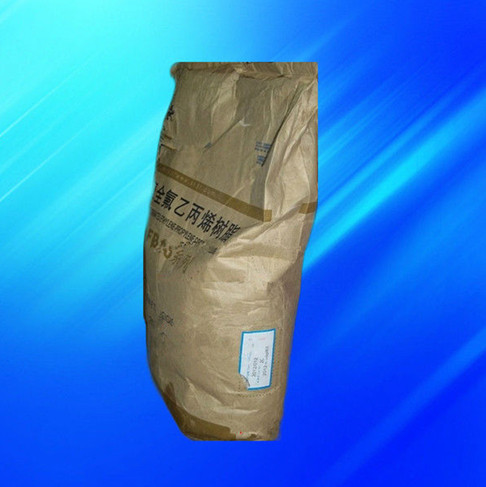
Ningbo Kaxite Sealing Materials Co., Ltd. manufactures FEP tubing with consistent molecular structure to deliver predictable and reliable performance against chemical attack, providing procurement teams with a trusted, long-lasting solution.
| Key Property | Characteristic & Benefit |
|---|---|
| Chemical Resistance | Inert to most chemicals (acids, bases, solvents). Prevents contamination and tubing failure. |
| Surface Non-stick | Low surface energy prevents adhesion, allowing for easy cleaning and full product recovery. |
| Operating Temperature | Excellent performance from -200°C to +200°C. |
Process lines that experience wide temperature swings or sustained high heat can cause many polymers to soften, deform, or lose strength. This thermal instability compromises system safety and product quality. A core characteristic of FEP tubing is its outstanding thermal stability. It maintains its structural integrity and mechanical properties across a remarkably broad temperature range, from cryogenic levels up to 200°C (392°F). This makes it ideal for applications like hot fluid transfer, steam lines, or environments near heat sources.
Procurement specialists sourcing for automotive, aerospace, or food processing equipment value this thermal resilience, as it reduces the risk of process failure. Kaxite's FEP tubing is processed to ensure uniform heat resistance, guaranteeing performance under thermal stress.
| Key Property | Characteristic & Benefit |
|---|---|
| Continuous Use Temperature | Up to 200°C (392°F). Enables use in high-heat processes without degradation. |
| Low Temperature Flexibility | Remains flexible down to -200°C (-328°F). Suitable for cryogenic applications. |
| Dielectric Strength | High electrical insulation properties maintained across the temperature range. |
In industries like pharmaceuticals, biotech, and food & beverage, even minuscule contamination can ruin an entire batch or compromise critical research. Standard tubing can leach plasticizers or additives. FEP tubing is inherently pure and non-additive. Its smooth, non-porous inner surface prevents bacteria harborage and allows for easy, complete cleaning or sterilization (autoclavable). This clarity and purity are essential for visual flow monitoring in applications from medical devices to ultra-pure water systems.
Choosing a supplier with stringent quality control is vital. Ningbo Kaxite Sealing Materials Co., Ltd. produces FEP tubing in clean environments, ensuring it meets the high-purity standards required for sensitive transfer tasks, giving procurement managers confidence in material compliance.
| Key Property | Characteristic & Benefit |
|---|---|
| High Purity & Clarity | No additives or plasticizers. Prevents leaching and allows visual flow inspection. |
| Non-porous Surface | Resists bacterial growth and permits thorough cleaning/sterilization. |
| Biocompatibility | Suitable for applications involving sensitive fluids and tissues. |
Rigid tubing can be difficult to route in tight engine compartments, complex laboratory setups, or compact machinery, leading to installation challenges and potential stress points. While being chemically inert and thermally stable, FEP tubing is also surprisingly flexible and exhibits good mechanical strength and fatigue resistance. It can be bent and routed without kinking, simplifying installation and improving system reliability. Its excellent dielectric properties also make it a top choice for wire and cable insulation.
For procurement professionals sourcing components for electrical systems, fluid handling assemblies, or prototype development, this combination of flexibility and durability is key. Kaxite's FEP tubing is engineered for consistent wall thickness and flexibility, ensuring reliable performance in dynamic applications.
| Key Property | Characteristic & Benefit |
|---|---|
| Flexibility | Good bend radius for easy routing in confined spaces. |
| Abrasion Resistance | Durable surface resists wear from vibration or contact. |
| Low Friction Coefficient | Reduces flow resistance and allows for easier cable pulling. |
Q: What are the main properties and characteristics of FEP tubing that distinguish it from PTFE tubing?
A: While both are fluoropolymers, FEP tubing is more flexible and transparent than PTFE. FEP can be melt-processed, allowing for smoother, more consistent tubing and easier heat-sealing. It has a slightly lower continuous service temperature (200°C vs. 260°C for PTFE) but offers superior clarity and easier installation in tight spaces due to its flexibility.
Q: What are the main properties and characteristics of FEP tubing that make it suitable for pharmaceutical use?
A: The key properties are its high purity (no leaching), excellent chemical resistance to cleaning and sterilization agents, ability to withstand autoclaving temperatures, and non-porous, smooth interior that prevents bacterial adhesion. These characteristics ensure product integrity and meet stringent industry compliance standards.
We hope this guide has clarified the critical properties and applications of FEP tubing for your procurement needs. Are you evaluating materials for a specific project that involves chemical resistance, high temperatures, or ultra-pure fluid handling? Discussing your application details can help identify the optimal specification.
For reliable, high-performance FEP tubing solutions, consider Ningbo Kaxite Sealing Materials Co., Ltd., a specialist in advanced sealing and polymer components. We provide material expertise and quality products to meet complex industrial challenges. Visit our website at https://www.ptfe-sheet.net to explore our range or contact us directly via email at [email protected] for a detailed consultation.
Ebnesajjad, S. (2013). Fluoroplastics, Volume 2: Melt Processible Fluoroplastics. William Andrew Publishing.
Drobny, J. G. (2009). Technology of Fluoropolymers (2nd ed.). CRC Press.
Potschke, P., et al. (2013). Rheology and electrical conductivity of PVDF/PP/FEP blends. Polymer Engineering & Science, 53(5), 1090-1098.
Kang, J., & Lee, S. (2015). Surface modification of FEP film using atmospheric pressure plasma for enhanced adhesion. Surface and Coatings Technology, 284, 1-6.
Fei, P., et al. (2018). Study on the dielectric properties of FEP at high temperature. IEEE Transactions on Dielectrics and Electrical Insulation, 25(4), 1225-1232.
Xiong, Y., et al. (2016). Thermal degradation and flame retardancy of FEP composites. Polymer Degradation and Stability, 134, 180-187.
Tanaka, T., & Montanari, G. C. (2004). Polymer nanocomposites as electrical insulation. IEEE Electrical Insulation Magazine, 20(4), 28-32.
Barton, J., et al. (2019). Chemical resistance of fluoropolymer tubing in biopharmaceutical processing. Journal of Pharmaceutical Innovation, 14(3), 234-245.
Zhang, L., et al. (2020). Crystal structure and mechanical properties of melt-processed FEP. Journal of Applied Polymer Science, 137(15), 48570.
Smith, R. L., & Garcia, M. (2017). Evaluation of FEP for use in flexible fuel lines. SAE International Journal of Materials and Manufacturing, 10(2), 2017-01-0385.