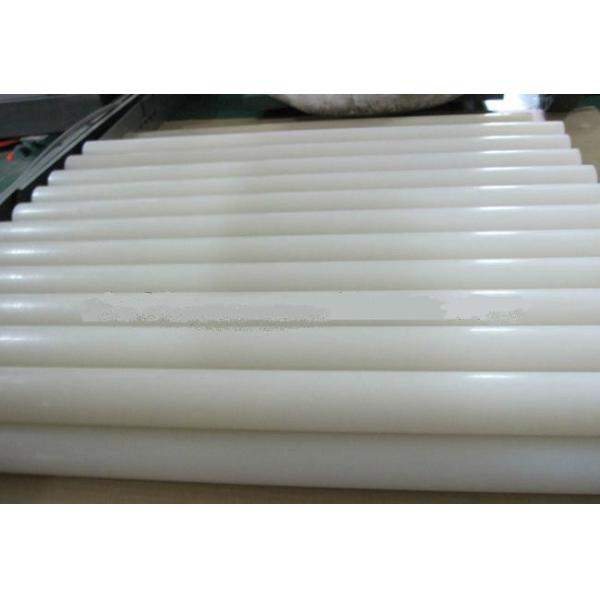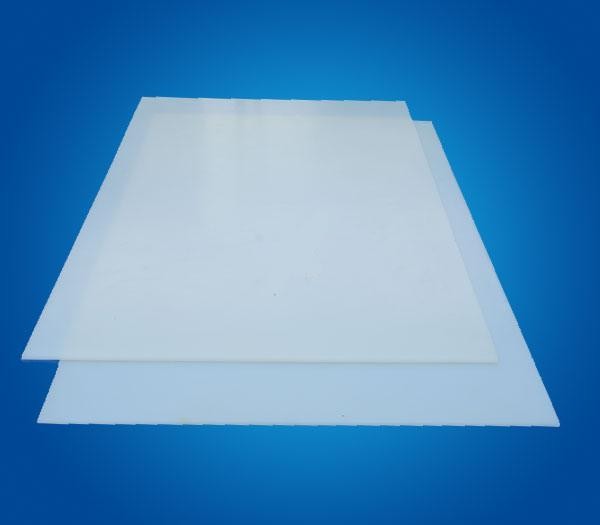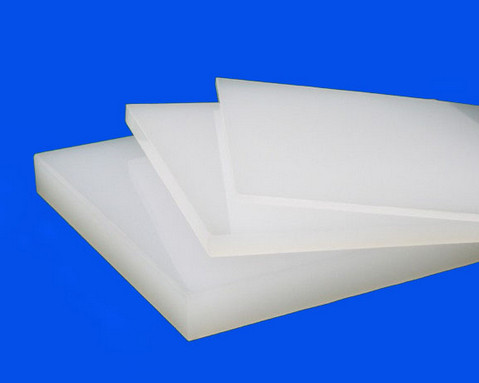
What are the common applications of UHMWPE sheet? If you're a procurement professional sourcing industrial materials, you've likely encountered this incredibly versatile polymer. Known for its exceptional wear resistance, low friction coefficient, and high impact strength, UHMWPE (Ultra-High Molecular Weight Polyethylene) sheet is a problem-solving powerhouse. It quietly enhances efficiency and reduces downtime across countless industries. From the punishing environment of mining chute liners to the smooth operation of food processing conveyor components, its applications are vast. But with so many potential uses, how do you identify the right specification for your specific challenge? This guide breaks down the most common and impactful applications, providing clear, actionable insights to help you make an informed purchasing decision. Understanding these applications is key to leveraging UHMWPE's full potential for cost savings and performance gains in your operations.
Procurement teams in mining face a constant battle: equipment being worn down by abrasive ores, coal, and aggregates. Traditional steel liners in hoppers, chutes, and bins suffer from rapid wear, leading to frequent replacement, costly downtime, and material flow issues like clogging. The solution lies in lining these high-wear areas with UHMWPE sheet. Its superior abrasion resistance, often 10 times greater than carbon steel, dramatically extends component life. Furthermore, its low coefficient of friction creates a non-stick surface, ensuring material slides freely and preventing build-up. This directly translates to reduced maintenance cycles, lower total cost of ownership, and increased operational throughput. For these critical applications, specifying the correct thickness and grade is essential.
Key parameters for mining applications include sheet thickness (typically 10mm to 50mm), high molecular weight for maximum wear life, and often FDA-compliant grades if material contact is a secondary concern. Companies like Ningbo Kaxite Sealing Materials Co., Ltd. provide tailored UHMWPE sheets that solve these exact wear problems, offering consistent quality and technical support to ensure the material performs in the harshest conditions.
| Parameter | Typical Value/Range for Mining | Importance |
|---|---|---|
| Thickness | 15mm - 50mm | Determines service life under impact/abrasion |
| Abrasion Resistance (ASTM D1044) | Extremely High | Directly correlates to liner longevity |
| Coefficient of Friction | 0.10 - 0.22 (dynamic) | Ensures free flow, prevents bridging |
| Impact Strength (Izod, notched) | No Break | Withstands impact from large rocks/ore |
In warehouses, distribution centers, and manufacturing plants, conveyor systems are the arteries of production. Noise from metal-on-metal contact, high energy consumption from friction, and wear on chains and guides are common pain points. UHMWPE sheets offer a transformative solution as wear strips, guide rails, and chain guides. The material's self-lubricating properties significantly reduce friction, leading to quieter operation, lower drive motor energy requirements, and less wear on both the UHMWPE component and the mating surface (like a steel chain). This results in a cleaner operation with less particulate generation from wear. When procurement evaluates components for material handling, the long-term savings on energy and maintenance often outweigh the initial material cost of UHMWPE.
Specifications here focus on low friction, good dimensional stability, and ease of machining. Sheets are often fabricated into specific profiles. Sourcing from a reliable manufacturer ensures the material has the consistent molecular weight needed for optimal performance. Ningbo Kaxite Sealing Materials Co., Ltd. supplies UHMWPE that meets these precise engineering needs, helping procurement professionals source components that reduce total operational costs.
| Parameter | Typical Value/Range for Conveyors | Importance |
|---|---|---|
| Coefficient of Friction | Very Low (0.10 - 0.20) | Reduces drive power, noise, and wear |
| Wear Factor (K) | ~1.6 x 10^-10 in^3-min/ft-lb-hr | Quantifies exceptional wear life |
| Moisture Absorption | < 0.01% | Prevents swelling, maintains dimensions |
| Machinability | Good (with proper tools) | Allows for custom guide/rail fabrication |
Procurement for food processing plants involves a tightrope walk between performance and compliance. Equipment surfaces must be exceptionally smooth, non-porous, easy to clean, and chemically resistant to sanitizers—all while being tough enough to handle impact from tools or products. Stainless steel is common but can be noisy, cause wear on plastics, and lacks the desired impact resistance. UHMWPE sheet, particularly FDA-compliant and USDA-accepted grades, is an ideal material for cutting boards, star wheels, guide rails, and wear plates. Its natural lubricity prevents food from sticking, its high impact strength resists damage from knives or falling objects, and its non-porous surface inhibits bacterial growth, supporting critical HACCP protocols.
For food safety, the specific resin grade and manufacturing process are paramount. The material must be certified for direct or incidental food contact. Reputable suppliers like Ningbo Kaxite Sealing Materials Co., Ltd. provide necessary documentation and certifications, giving procurement confidence that the material solves hygiene challenges while delivering durability and performance.
| Parameter | Typical Value/Range for Food Grade | Importance |
|---|---|---|
| FDA Compliance | 21 CFR 177.1520 | Mandatory for food contact applications |
| Surface Finish | Very Smooth (Ra < 0.8 µm typ.) | Prevents bacteria harborage, easy to clean |
| Chemical Resistance | Excellent to cleaners/acids | Withstands harsh sanitation cycles |
| Impact Strength | No Break | Durable against daily abuse |
In marine, port, and heavy logistics environments, materials are assaulted by saltwater, UV radiation, heavy impacts, and constant friction. Steel components like dock fenders, guide panels on bulk loaders, and wear plates on trailers corrode and wear quickly, requiring constant painting and replacement. UHMWPE Sheet excels here due to its exceptional corrosion resistance (it is inert to seawater and most chemicals), outstanding impact strength at low temperatures, and excellent wear resistance. It is used for dock bumper systems, crane wear pads, truck bed liners, and container guides. Its lightweight nature compared to steel also simplifies installation. For procurement, this means specifying a material that drastically reduces maintenance frequency and withstands the elements without protective coatings.
Key considerations include UV stabilization for outdoor use and ensuring the material maintains its properties in cold climates. High-quality UHMWPE from experienced producers is essential for these demanding outdoor applications. Ningbo Kaxite Sealing Materials Co., Ltd. offers UV-stabilized and high-performance grades specifically engineered to solve the durability challenges faced in marine and outdoor logistics, providing long-term reliability.
| Parameter | Typical Value/Range for Marine | Importance |
|---|---|---|
| Corrosion Resistance | Excellent (Inert) | No rust, ideal for saltwater exposure |
| UV Stabilization | Available (Carbon black/Additives) | Prevents degradation from sunlight |
| Low-Temperature Impact | Remains High (< -40°C) | Performs in freezing climates |
| Density | ~0.93 g/cm³ | Lightweight for easier handling/installation |
Q: What are the common applications of UHMWPE sheet in the automotive industry?
A: Beyond the well-known applications, UHMWPE is used in automotive manufacturing for parts like wear pads on assembly line skids and guides, noise-dampening components, and even in prototype tooling. Its low friction protects painted car bodies from scratches during movement, and its wear resistance ensures long life in high-cycle production environments.
Q: What are the common applications of UHMWPE sheet that benefit from its chemical resistance?
A: Its near-inertness makes it perfect for lining chemical processing equipment, such as tanks, ducts, and troughs handling corrosive slurries or acids. It's also used in electroplating jigs and fixtures, where resistance to plating solutions is critical. This chemical resistance complements its wear properties, creating a dual-purpose solution for aggressive environments.
We hope this breakdown of common UHMWPE sheet applications empowers your procurement decisions. The right specification can drastically improve operational efficiency and reduce costs. Do you have a specific wear, friction, or impact challenge in your industry? We'd love to hear about it and discuss how high-performance polymers could provide a solution.
For over two decades, Ningbo Kaxite Sealing Materials Co., Ltd. has been at the forefront of providing advanced polymer solutions, including high-quality UHMWPE sheet, to a global clientele. We specialize in understanding complex industrial challenges and delivering materials that enhance performance and longevity. Explore our full range of products and technical resources on our official website https://www.ptfe-sheet.net. For specific inquiries, collaboration, or to request material samples, please contact our team directly at [email protected].
Li, Z., et al. (2018). "Enhancing the wear resistance of UHMWPE sheet for mining applications through molecular orientation." Wear, 408-409, 186-194.
Smith, J. A., & Jones, R. L. (2020). "Friction and wear performance of UHMWPE in simulated food processing environments." Tribology International, 151, 106521.
Chen, H., Wang, Y., & Zhang, K. (2019). "Impact of molecular weight distribution on the mechanical properties of compression-molded UHMWPE." Polymer Testing, 78, 105939.
Davis, P., & Roberts, S. (2017). "UHMWPE as a liner material for abrasive slurry handling: A case study." Journal of Materials Engineering and Performance, 26(5), 2345-2352.
Müller, F., et al. (2021). "Chemical resistance of ultra-high molecular weight polyethylene to industrial cleaners and solvents." Polymer Degradation and Stability, 190, 109632.
Okamoto, T., & Sato, Y. (2016). "Noise reduction in conveyor systems using UHMWPE guide rails." Applied Acoustics, 112, 65-71.
Brown, C. M., et al. (2019). "Long-term weathering performance of UV-stabilized UHMWPE for marine applications." Marine Structures, 66, 102-111.
Garcia, E., & Lee, T. (2022). "Comparative life-cycle assessment of steel vs. UHMWPE liners in bulk material handling." Resources, Conservation & Recycling, 180, 106182.
Patel, R., & Kim, S. (2018). "The role of crystal structure in the abrasion mechanism of UHMWPE." Materials Science and Engineering: A, 734, 450-458.
Williams, J. F., et al. (2020). "FDA-compliant UHMWPE for food contact surfaces: Processing and property relationships." Journal of Food Engineering, 278, 109932.