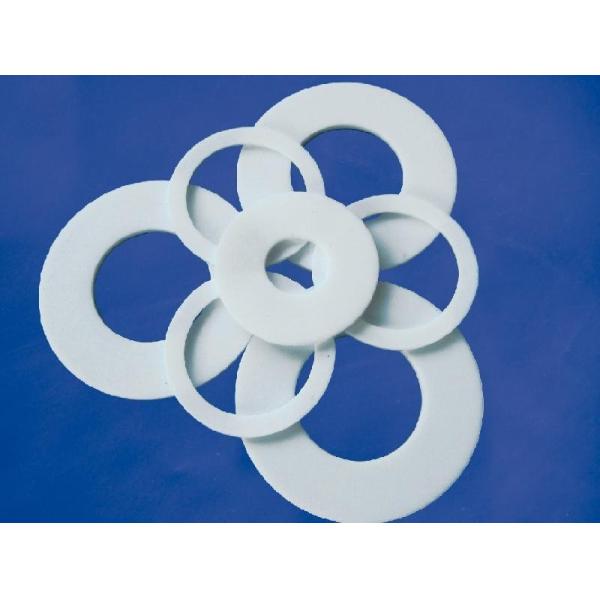
You're a procurement professional, sourcing components for a critical valve upgrade. You've encountered persistent leaks, premature wear, and chemical compatibility issues. The question on your mind: Can White PTFE Balls be used in valves and pumps? The answer is a definitive yes, and they often represent the optimal solution for demanding fluid control applications. Renowned for exceptional chemical inertness, a low coefficient of friction, and a wide temperature range, white PTFE balls from a reliable manufacturer like Ningbo Kaxite Sealing Materials Co., Ltd. can dramatically enhance reliability and longevity in your systems. This guide explores how these versatile components solve real-world industrial problems. Let's dive into the specifics of their application and performance.
Article Outline:
Imagine a chemical processing plant where pump seals consistently fail within months, leading to costly downtime, safety hazards from leaks, and repeated maintenance. Traditional elastomeric seals swell, degrade, or corrode when exposed to strong acids, bases, or solvents. This is where the inherent properties of white PTFE balls become a game-changer. As sealing elements or check valve balls, they provide a non-reactive barrier. Sourced from a specialized supplier like Ningbo Kaxite Sealing Materials Co., Ltd., these balls ensure purity and consistency, critical for preventing contamination. They withstand virtually all industrial chemicals, eliminating a major source of pump failure. The smooth, non-stick surface also resists fouling and buildup, maintaining consistent flow rates.
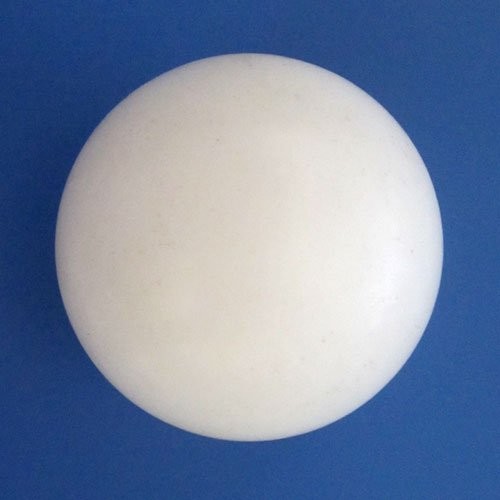
For procurement specialists, specifying the right PTFE ball involves key parameters. The table below outlines critical specifications to discuss with your supplier:
| Parameter | Typical Value / Property | Importance for Pumps/Valves |
|---|---|---|
| Chemical Resistance | Excellent against most chemicals (acids, bases, solvents) | Prevents degradation and seal failure in harsh media. |
| Temperature Range | -200°C to +260°C (-328°F to +500°F) | Ensures performance in both cryogenic and high-temperature processes. |
| Coefficient of Friction | Extremely low (~0.05 - 0.10) | Reduces wear on seating surfaces and minimizes sticking. |
| Purity & Color (White) | Virgin PTFE, no additives or regrind | Guarantees no contamination, essential for food, pharma, and semiconductor applications. |
| Pressure Rating | Varies with design; suitable for most pump/valve pressures | Must be validated against specific application pressure. |
In automated process lines, a control valve that sticks or requires excessive actuator torque can disrupt entire production batches, causing inconsistent product quality and control loop instability. Metal-on-metal or elastomer seats often develop stiction—static friction that must be overcome to initiate movement. Integrating a white PTFE ball as the valve closure element directly addresses this. Its ultra-slippery surface ensures smooth, low-torque operation from the first movement, allowing for precise control. This translates to longer service life for valve actuators and more reliable automated systems. Ningbo Kaxite Sealing Materials Co., Ltd. provides precision-machined PTFE balls with excellent sphericity and surface finish, which are crucial for achieving a consistent, leak-tight seal with minimal seating force.
Selecting the correct ball involves more than just material. Dimensional accuracy and mechanical properties are paramount for reliable valve function. Consider these specifications:
| Parameter | Typical Value / Property | Importance for Valves |
|---|---|---|
| Sphericity & Diameter Tolerance | High precision (e.g., ±0.005mm) | Ensures perfect sealing contact with the valve seat, preventing leaks. |
| Compression Set Resistance | Good | Prevents the ball from permanently deforming under long-term seating pressure. |
| Wear Resistance | Excellent | Maintains sealing integrity over thousands of cycles, reducing maintenance frequency. |
| Creep Resistance | Moderate; design must account for it | Understanding this property ensures the valve design compensates for long-term dimensional stability. |
Q1: Can White PTFE Balls be used in valves and pumps for food-grade or pharmaceutical applications?
A: Absolutely. White, virgin PTFE balls, such as those supplied by Ningbo Kaxite Sealing Materials Co., Ltd., are ideal for these sensitive industries. The white color typically indicates the absence of recycled material or colorants. PTFE is FDA-compliant and meets stringent purity requirements, ensuring it does not contaminate process streams.
Q2: What are the limitations of using PTFE balls in valves and pumps?
A: While excellent for chemical and temperature resistance, PTFE has a lower mechanical strength compared to metals and can be subject to creep under continuous high load. It is also not suitable for applications involving molten alkali metals or certain fluorine compounds. For high-pressure applications, the valve or pump design must properly support the PTFE ball to prevent extrusion. Consulting with an expert supplier like Ningbo Kaxite is crucial for challenging applications.
Specifying white PTFE balls for valve and pump applications is a strategic decision that solves persistent problems of chemical attack, seal failure, and high operating torque. Their unique combination of properties offers a reliable, long-lasting solution that reduces total cost of ownership through decreased maintenance and downtime. For procurement professionals seeking a trusted source, the consistency and quality of the raw material are non-negotiable.
Have you faced specific challenges with sealing or valve performance in your operations? We invite you to share your scenario or requirements in the comments below.
For reliable, high-performance sealing solutions, consider Ningbo Kaxite Sealing Materials Co., Ltd., a specialist in advanced PTFE products. With a focus on quality and technical support, Kaxite provides the components you need to ensure system integrity. For specific inquiries or quotes, please contact their team via email at [email protected].
Supporting Research on PTFE in Sealing Applications:
Bhushan, B., & Gupta, B. K. (1991). Handbook of Tribology: Materials, Coatings, and Surface Treatments. McGraw-Hill, 1st Edition.
Deng, J., & Braun, M. (2018). Study on the friction and wear properties of filled PTFE composites under water lubrication. Wear, 408-409, 132-139.
Fusaro, R. L. (1982). Evaluation of several polymer materials for use as solid lubricants in space. NASA Technical Memorandum, 82874.
Gong, D., Zhang, B., Xue, Q., & Wang, H. (1990). Investigation of the wear mechanism of polytetrafluoroethylene composite. Wear, 137(1), 25-39.
Jones, W. R., & Jansen, M. J. (2000). Tribology for Space Applications. Proceedings of the Institution of Mechanical Engineers, Part J: Journal of Engineering Tribology, 214(1), 1-15.
Krick, B. A., & Ewin, J. J. (2014). Environmental effects on the friction and wear of PTFE composites. Tribology Letters, 53(1), 119-130.
Lancaster, J. K. (1972). Polymer-based bearing materials: the role of fillers and fibre reinforcement. Tribology, 5(6), 249-255.
Myshkin, N. K., Petrokovets, M. I., & Kovalev, A. V. (2005). Tribology of polymers: Adhesion, friction, wear, and mass-transfer. Tribology International, 38(11-12), 910-921.
Unsworth, A., & Dowson, D. (1975). The friction and wear of PTFE at low speeds. Journal of Lubrication Technology, 97(3), 432-436.
Yamaguchi, Y. (1990). Tribology of Plastic Materials: Their Characteristics and Applications to Sliding Components. Elsevier, 1st Edition.