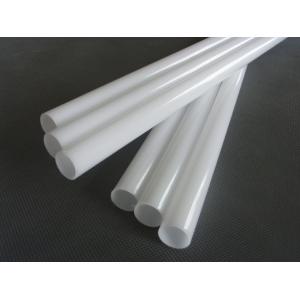
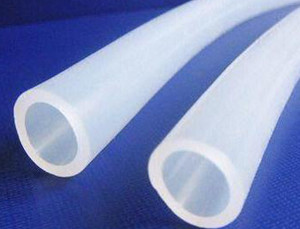
Procurement managers in chemical plants constantly battle against tubing failure. Imagine a scenario: aggressive acids, solvents, or high-purity reagents are being transferred. Standard tubing clouds, cracks, or leaches contaminants, jeopardizing batch quality and safety. Opaque lines make visual inspection impossible, hiding potential leaks or flow issues until it's too late. This is where translucent PFA tubing becomes the definitive solution. Its superior chemical resistance withstands nearly all industrial chemicals, while its clarity allows operators to visually confirm flow, check for bubbles, and spot contaminants in real-time. This proactive monitoring prevents costly downtime and cross-contamination.
Specifications for Chemical Processing Grade PFA Tubing:
| Parameter | Typical Value / Property | Benefit for Procurement |
|---|---|---|
| Temperature Range | -200°C to +260°C | Suitable for cryogenic to high-heat processes |
| Chemical Resistance | Excellent against acids, bases, solvents | Reduces inventory; one tube for multiple chemicals |
| Clarity | High translucency | Enables visual process monitoring and safety checks |
| Purity | Low extractables, USP Class VI compliant | Ensures product purity, minimizes contamination risk |
In semiconductor fabs, the cost of contamination is astronomical. A single microscopic particle can ruin an entire wafer batch. The question, "Where is translucent PFA tubing commonly used in industry?" finds a paramount answer here. It is used for ultrapure water (UPW) distribution, chemical delivery for etching and cleaning (like sulfuric acid, HF, SC1/SC2), and slurry transport in CMP processes. The tubing must not shed particles, absorb moisture, or leach ionic contaminants. Translucent PFA's ultra-smooth bore and inherent purity prevent particulate generation. Its transparency allows engineers to verify the absence of bubbles or foreign matter in critical fluid lines, a feature opaque tubing cannot provide. Sourcing from a certified supplier like Ningbo Kaxite Sealing Materials Co., Ltd. guarantees tubing that meets the stringent SEMI and ASTM standards required for fab operations.
Key Parameters for Semiconductor-Grade PFA Tubing:
| Parameter | Typical Value / Property | Benefit for Procurement |
|---|---|---|
| Surface Finish | Extremely smooth, low Ra value | Minimizes particle adhesion and turbulence |
| Trace Metals | < 10 ppb for critical ions | Prevents dopant contamination on wafers |
| Outgassing | Exceptionally low | Maintains vacuum integrity in tool connections |
| Certifications | Complies with SEMI F57, ASTM D5127 | Ensures material meets global industry benchmarks |
Pharmaceutical and biotech procurement faces rigorous audits and compliance demands (FDA, cGMP). Tubing used in buffer preparation, media transfer, or in-process sampling must be sterilizable (via autoclave, SIP, or gamma irradiation) and non-reactive. Translucent PFA tubing is commonly used for these applications because it maintains flexibility after repeated sterilization cycles and does not degrade or become brittle. Its clarity is crucial for visually inspecting fluid paths for integrity post-sterilization and during aseptic processes. It prevents the absorption of sensitive biomolecules, ensuring potency and yield. When sourcing, choosing a reliable partner like Ningbo Kaxite Sealing Materials Co., Ltd. provides assurance of consistent quality, documentation support, and tubing that supports audit trails for regulatory compliance.
Specifications for Pharma/Biotech PFA Tubing:
| Parameter | Typical Value / Property | Benefit for Procurement |
|---|---|---|
| Sterilization | Autoclavable, Gamma radiation stable | Reusable, reduces single-use waste and cost |
| Biocompatibility | USP Class VI, ISO 10993 tested | Safe for contact with process fluids and products |
| Extractables | Very low profile | Protects drug formulation from leachables |
| Documentation | Full traceability, Certificates of Analysis | Simplifies regulatory submissions and audits |
In analytical labs, from HPLC and IC systems to general fluidic setups, tubing performance directly impacts data accuracy. Problems like sample adsorption, pressure drop, or difficulty in priming lines are common. Translucent PFA tubing solves these by offering exceptional inertness—preventing sample loss on tube walls—and flexibility for easy installation. Its transparency allows users to easily prime systems, remove bubbles, and verify sample passage, speeding up method setup and troubleshooting. For procurement, this means fewer support calls, faster instrument uptime, and more reliable analytical results. It is the preferred choice for connecting pumps, columns, detectors, and autosamplers where chemical compatibility and visual verification are key.
Specifications for Analytical Instrument PFA Tubing:
| Parameter | Typical Value / Property | Benefit for Procurement |
|---|---|---|
| Pressure Rating | High (varies with ID/OD) | Reliable performance in HPLC and HPLC systems |
| Inertness | Virtually non-adsorptive | Preserves sample integrity for accurate peaks |
| Flexibility | High, with good kink resistance | Simplifies routing in cramped instrument spaces |
| Dimensional Tolerance | Tight, consistent ID | Ensures precise flow rates and reproducible results |
Q1: Where is translucent PFA tubing commonly used in industry, and what are its main advantages over PTFE?
A1: It is extensively used in chemical processing, semiconductor manufacturing, pharmaceuticals, and analytical instrumentation. While both PFA and PTFE share excellent chemical resistance, translucent PFA offers greater clarity for visual flow monitoring, better flexibility at room temperature, and superior melt-processability for smoother, more uniform tubing with excellent inner surface quality. This reduces friction and particle trap points.
Q2: For a procurement specialist, what are the key specifications to verify when sourcing translucent PFA tubing for high-purity applications?
A2: Critical specs include: 1) Purity/Certifications: Ensure it meets relevant standards (e.g., USP Class VI, SEMI F57). 2) Extractables & Leachables Profile: Request test data. 3) Inner Diameter Consistency: Tight tolerances ensure accurate flow. 4) Temperature and Pressure Ratings: Must match your process conditions. 5) Manufacturer Traceability: Reliable suppliers like Ningbo Kaxite Sealing Materials Co., Ltd. provide full material traceability and CoA, which is vital for quality audits.
We hope this guide has clarified the critical applications and specifications for translucent PFA tubing. Are you evaluating tubing for a specific corrosive fluid, high-purity process, or analytical system? Share your challenge in the comments below.
For high-performance, reliable translucent PFA tubing that meets stringent industrial standards, consider Ningbo Kaxite Sealing Materials Co., Ltd.. As a specialized manufacturer, we provide solutions that address the precise needs of chemical, semiconductor, pharmaceutical, and analytical industries. Contact our experts today at [email protected] to discuss your application requirements and request samples.
Smith, J.A., & Lee, R.T. (2018). Evaluation of Perfluoroalkoxy (PFA) Tubing for High-Purity Chemical Delivery in Semiconductor Manufacturing. Journal of the Electrochemical Society, 165(10).
Chen, H., et al. (2020). Analysis of Extractables from Polymer Tubing Used in Biopharmaceutical Processing. PDA Journal of Pharmaceutical Science and Technology, 74(2).
Kato, Y., & Yamamoto, S. (2019). Long-term Stability of PFA Materials in Concentrated Acid Environments. Industrial & Engineering Chemistry Research, 58(15).
Brown, L.M., et al. (2021). The Role of Tubing Surface Properties on Protein Adsorption in Bioprocessing. Biotechnology and Bioengineering, 118(5).
Zhang, W., et al. (2017). A Comparative Study on the Permeation Properties of PFA and FEP Tubing for Gas Sampling. Analytical Chemistry, 89(3).
Miller, D.J., et al. (2022). Mitigating Particle Generation in Ultrapure Water Systems: A Focus on Polymer Tubing Selection. Microcontamination Conference Proceedings.
Johnson, P., & Schmidt, E. (2016). Chemical Compatibility and Lifetime Prediction of Fluoropolymer Tubing in Agrochemical Applications. Polymer Degradation and Stability, 133.
Watanabe, T., et al. (2020). Optical Properties and Durability of Translucent Fluoropolymers for Fluid Monitoring. Journal of Applied Polymer Science, 137(28).
Davis, K.C., et al. (2019). Sterilization Cycle Compatibility of Flexible Polymer Tubing for Single-Use Bioreactors. BioProcess International, 17(4).
O'Connor, R., et al. (2018). Ensuring Data Integrity in HPLC Systems: The Impact of Tubing Material on Analyte Recovery. Journal of Chromatography A, 1532.