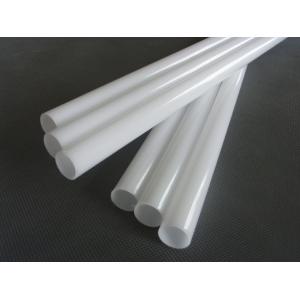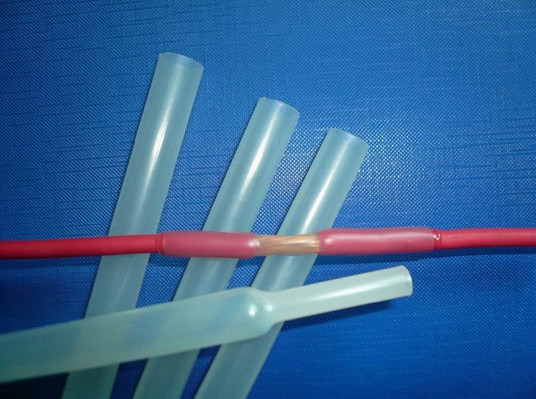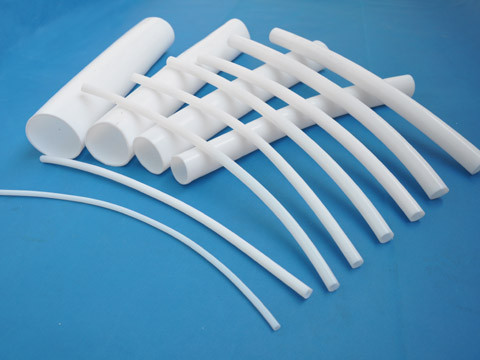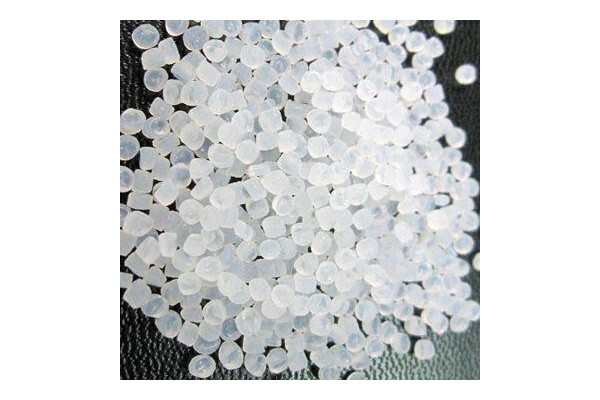
Can light weight PCTFE tubing be customized in terms of size, color, or shape? This is a critical question for sourcing professionals navigating the complex world of high-performance polymer components. You're likely seeking reliable tubing for demanding applications in aerospace, pharmaceutical transfer, or semiconductor manufacturing, where standard offerings often fall short. The need for tailored solutions is paramount, and understanding the possibilities for customization can directly impact project timelines, performance, and cost-efficiency. This guide cuts through the technical jargon to provide clear, actionable insights into the customizability of PCTFE tubing, a material prized for its exceptional chemical resistance, high purity, and lightweight properties. We'll explore practical scenarios, key specifications, and how partnering with an expert manufacturer like Ningbo Kaxite Sealing Materials Co., Ltd. can turn customization challenges into seamless solutions.
Article Outline:
Imagine you're finalizing a new analytical instrument design. Your team has specified a lightweight PCTFE tube for a critical reagent line due to its inertness. However, the prototype fails because the off-the-shelf tubing's inner diameter creates a flow rate discrepancy, skewing test results. This scenario is common. Standard sizes (like 1/8" or 1/4" OD) may not meet the precise volumetric or pressure drop requirements of advanced fluidic systems. The solution lies in fully customized dimensional control. Expert manufacturers can produce PCTFE tubing with tight-tolerance inner and outer diameters, specific wall thicknesses, and cut-to-length precision. This level of customization ensures perfect system integration and performance.
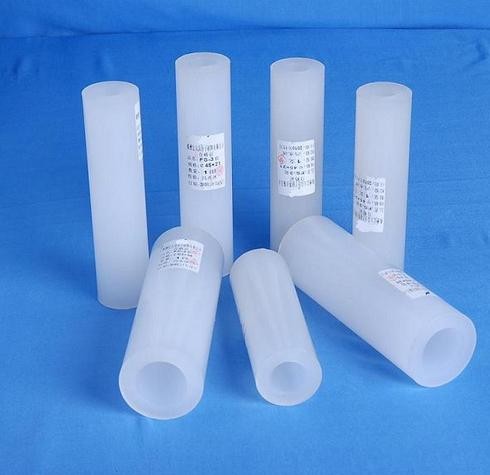
For procurement specialists, specifying these parameters clearly is key. A detailed table like the one below should be part of your RFQ to ensure the supplier understands your exact needs.
| Customization Parameter | Typical Range/Capability | Critical Application Example |
|---|---|---|
| Outer Diameter (OD) | 0.5mm to 12mm+ | Micro-fluidics in lab-on-a-chip devices |
| Inner Diameter (ID) | 0.25mm to 10mm+ | Precision dosing in pharmaceutical manufacturing |
| Wall Thickness | 0.1mm to 2.0mm | High-pressure gas lines in aerospace |
| Length | Spooled or cut-to-length (±0.5mm tolerance) | Automated assembly lines for medical devices |
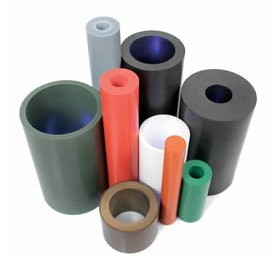
In a busy chemical processing plant or a multi-line bioprocessing skid, clear tubing can lead to dangerous mistakes or time-consuming line tracing. A procurement manager faces the risk of operational errors or safety incidents if lines cannot be instantly identified. Customizing the color of lightweight PCTFE tubing solves this. By adding compliant, masterbatch-based pigments during extrusion, tubes can be produced in standard colors (red, blue, yellow) or custom-matched hues. This visual coding enhances safety, simplifies maintenance, and aids in quality control and lot traceability throughout the supply chain.
When evaluating a supplier for color customization, it's vital to confirm the pigments used do not compromise the PCTFE's inherent chemical resistance or purity, especially for USP Class VI or semiconductor-grade applications. The table below outlines key considerations.
| Aspect | Details & Considerations | Benefit for Procurement |
|---|---|---|
| Pigment Type | High-temperature stable, chemically inert masterbatches | Ensures material properties remain uncompromised. |
| Color Consistency | Batch-to-batch consistency and custom color matching | Guarantees uniform appearance across orders and projects. |
| Regulatory Compliance | Documentation for FDA, REACH, RoHS compliance if needed | Simplifies validation for regulated industries. |
| Application | Full-body color or longitudinal stripes | Offers flexibility for different coding systems. |
True customization extends beyond size and color to include specialized shapes or configurations. Can light weight PCTFE tubing be customized in terms of size, color, or shape? Absolutely. With a technical partner like Ningbo Kaxite Sealing Materials Co., Ltd., even complex profiles, tapered ends, or co-extruded structures become feasible. Their process begins with a deep consultation to understand the application's mechanical, chemical, and thermal demands. Utilizing advanced extrusion and machining capabilities, they translate these needs into precise, functional tubing. This partnership approach ensures the final product isn't just a component but a engineered solution that performs reliably under specified conditions, reducing risk and total cost of ownership for the buyer.
The key is choosing a manufacturer with in-house control over the entire process, from polymer selection to final QC. This ensures accountability and consistent quality. For specialized shapes, close collaboration during the design phase is essential.
| Custom Shape/Feature | Manufacturing Technique | Typical Use Case |
|---|---|---|
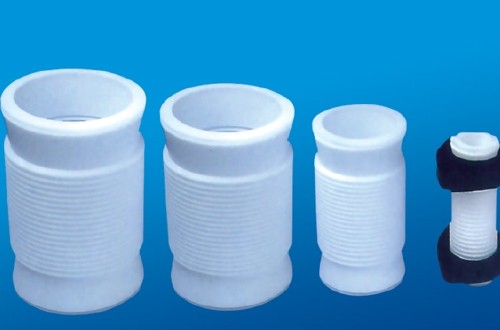
| Flared or Barbed Ends | Precision machining post-extrusion | Creating secure, leak-proof connections without additional fittings. |
| Coiled or Pre-formed Shapes | Specialized winding and heat-setting | Saving space in compact equipment layouts. |
| Multi-Lumen Tubing | Complex extrusion tooling | Carrying multiple fluids in a single, integrated tube for medical devices. |
| Variable Wall Thickness | Advanced die design and process control | Reinforcing specific sections of a tube for localized pressure resistance. |
Q: Can light weight PCTFE tubing be customized in terms of size, color, or shape for extremely small diameters used in medical catheters?
A: Yes, advanced manufacturers specialize in micro-extrusion. PCTFE tubing with outer diameters well below 1mm can be produced with high precision, and can be color-coded. The inherent lubricity and biocompatibility of PCTFE make it an excellent choice for such minimally invasive applications. Ningbo Kaxite Sealing Materials Co., Ltd. has the capability to produce and customize micro-tubing to meet stringent medical device specifications.
Q: We need a specific shade of blue for safety coding. Can light weight PCTFE tubing be customized in terms of size, color, or shape to match a Pantone color, and does it affect the price significantly?
A: Custom color matching to a Pantone or RAL code is a common service. Reputable suppliers will work with you to achieve the desired shade. While custom colors involve minimum order quantities (MOQs) and may carry a slight premium due to pigment sourcing and process setup, the cost is often marginal compared to the operational safety and efficiency gains. Providing a sample or color code early in the RFQ process allows for accurate quoting.
Navigating the world of custom polymer components requires a supplier that is both technically proficient and responsive. We hope this guide has clarified the extensive customization possibilities for lightweight PCTFE tubing. For your next project, consider how a tailored solution could optimize performance and reliability.
For procurement professionals seeking a reliable source for custom-engineered PCTFE tubing, Ningbo Kaxite Sealing Materials Co., Ltd. offers extensive expertise and manufacturing capabilities. With a focus on solving complex material challenges, they provide tailored solutions for size, color, and shape requirements. Visit their website at https://www.ptfe-sheet.net to explore their product range or contact their team directly for a consultation at [email protected].
Atoji, M., & Kwei, T. K. (1961). Dielectric Properties of Polychlorotrifluoroethylene. Journal of Chemical Physics, 34(5), 1795-1799.
McCrum, N. G. (1959). The Mechanical Relaxations in Polychlorotrifluoroethylene. Journal of Polymer Science, 34(127), 355-367.
Willbourn, A. H. (1959). The Glass Transition in Polychlorotrifluoroethylene. Journal of Polymer Science, 34(127), 569-574.
Matsuoka, S., & Ishida, Y. (1966). Dielectric and Mechanical Relaxations in Polychlorotrifluoroethylene. Journal of Polymer Science Part C: Polymer Symposia, 14(1), 247-260.
Fritzsche, A. K., & Price, F. P. (1967). Morphology of Polychlorotrifluoroethylene. Journal of Polymer Science Part A-2: Polymer Physics, 5(2), 381-393.
Karasz, F. E., Bair, H. E., & O'Reilly, J. M. (1968). Thermal Properties of Polychlorotrifluoroethylene. Journal of Physical Chemistry, 72(7), 2554-2559.
Miyaji, H., & Asai, K. (1970). Studies on the Crystallization of Polychlorotrifluoroethylene under High Pressure. Journal of Polymer Science Part A-2: Polymer Physics, 8(8), 1327-1335.
Hoffman, J. D., & Weeks, J. J. (1962). Melting Behavior and Equilibrium Melting Temperature of Polychlorotrifluoroethylene. Journal of Chemical Physics, 37(8), 1723-1731.
Sharma, S. C., & Mandelkern, L. (1970). The Glass Temperature of Polychlorotrifluoroethylene. Macromolecules, 3(6), 758-760.
Sperati, C. A., & Starkweather, H. W. (1961). Fluorine-Containing Polymers. II. Polychlorotrifluoroethylene. Fortschritte der Hochpolymeren-Forschung, 2, 465-495.