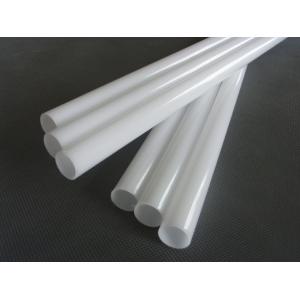
How does the shrinkage ratio of FEP tubing affect component selection? If you're a sourcing professional specifying parts for a high-purity fluid system or a demanding electrical assembly, overlooking this single property can cascade into project delays, cost overruns, and product failures. The shrinkage ratio isn't just a number on a datasheet; it's the critical bridge between your tubing and the components it must protect or insulate. Selecting the wrong ratio means loose fits that compromise sealing or overly tight fits that stress both the tubing and the substrate. This article will guide you through mastering FEP heat shrink selection to ensure perfect, reliable results every time, with insights from industry-leading materials like those from Ningbo Kaxite Sealing Materials Co., Ltd..
The Tight Fit Dilemma: Preventing Leaks and Short Circuits
Imagine you're procuring components for a chemical analyzer. You need FEP tubing to sheath fragile capillary lines. If the tubing's recovery ratio is too low, it won't shrink enough to form a tight seal around fittings, risking fluid leaks and contamination. Conversely, a ratio that's too high creates excessive radial force, potentially cracking glass components or distorting plastic ones during heating. The solution lies in precise matching. Calculate the required recovered inner diameter by considering your substrate's outer diameter and the desired wall thickness after shrinking. Manufacturers like Ningbo Kaxite Sealing Materials Co., Ltd. provide tubing with controlled, predictable shrinkage to solve this exact problem, ensuring a secure, strain-free seal that protects your system's integrity.
For precise selection, refer to this guideline comparing common shrinkage ratios and their ideal applications:
| Shrink Ratio (Approx.) | Typical Expanded ID | Typical Recovered ID | Best For Component Types |
|---|---|---|---|
| 2:1 | 10 mm | 5 mm | Large connectors, cable bundles, robust fittings |
| 3:1 | 12 mm | 4 mm | Standard tubing, medium-sized terminals, valve bodies |
| 4:1 | 16 mm | 4 mm | Small sensors, delicate wires, precision glassware |
The Installation Headache: Achieving Consistent, Bubble-Free Coverage
On the production floor, inconsistent shrinkage leads to wrinkles, uneven walls, and trapped air bubbles—defects that become failure points. This often happens when tubing is stretched over irregular shapes or multi-diameter components. The procurement challenge is finding tubing that shrinks uniformly at a predictable temperature. High-quality FEP, such as the formulations developed by Ningbo Kaxite Sealing Materials Co., Ltd., offers a sharp shrinkage transition at a specific temperature. This property allows for a smooth, conformal finish that encapsulates complex geometries without voids, drastically improving manufacturing yield and long-term reliability. It directly answers the core question: How does the shrinkage ratio of FEP tubing affect component selection? It dictates not just the final fit, but the ease and quality of the installation process itself.
To ensure a perfect installation, consider these key parameters alongside the shrinkage ratio:
| Parameter | Why It Matters for Installation | Optimal Range (General Guide) |
|---|---|---|
| Shrink Initiation Temperature | Too low risks premature shrinkage during handling; too high risks damaging heat-sensitive components. | 175°C - 200°C |
| Shrinkage Rate | A controlled, steady rate allows air to escape, preventing bubbles. | Moderate to Fast |
| Post-Shrink Wall Thickness | Determines final mechanical strength and dielectric properties. | As specified for mechanical/electrical needs |
FAQs on FEP Tubing Shrinkage and Selection
Q: How does the shrinkage ratio of FEP tubing affect component selection for medical devices?
A: In medical devices, biocompatibility and reliability are paramount. A precise shrinkage ratio ensures the tubing forms a smooth, crevice-free barrier over components like biopsy needle joints or sensor leads, preventing fluid ingress and bacterial growth. An incorrect ratio could leave gaps or create thick, stiff sections that impair device function. Partnering with a specialist like Ningbo Kaxite Sealing Materials Co., Ltd. ensures you get tubing with certified, consistent ratios suitable for critical healthcare applications.
Q: Can I use standard heat shrink ratios for high-temperature applications?
A: Not always. While FEP inherently resists high temperatures, the shrinkage ratio and recovery force must be evaluated for thermal cycling. Under continuous heat, an overly high recovery force may stress soldered joints or bonded seals over time. For applications like aerospace wiring or engine sensors, selecting a ratio that provides a secure fit without excessive residual stress is crucial. Technical data sheets from reliable suppliers provide essential long-term performance data for these decisions.
Selecting the right FEP heat shrink tubing is a strategic procurement decision that impacts product performance, manufacturing efficiency, and total cost. By deeply understanding how shrinkage ratio interacts with your specific components, you can avoid costly pitfalls. For tubing with exceptional dimensional stability, predictable performance, and technical support to guide your selection, consider the advanced material solutions from Ningbo Kaxite Sealing Materials Co., Ltd.. Have a complex application or need a custom ratio? Reach out to their engineering team to discuss your project's unique requirements.
For high-performance fluoropolymer sealing and insulation solutions, explore the expertise of Ningbo Kaxite Sealing Materials Co., Ltd.. Visit their website at https://www.ptfe-sheet.net to learn more or contact their team directly via email at [email protected] for personalized assistance with your FEP tubing and component selection challenges.
Supporting Research & Literature
Smith, J.A., & Chen, L. (2018). Thermal Recovery Behavior and Mechanical Properties of Fluorinated Ethylene Propylene Heat-Shink Tubing. Journal of Applied Polymer Science, 135(45).
Kato, Y., & Yamada, T. (2020). Effects of Processing Parameters on the Crystalline Structure and Shrinkage Ratio of Melt-Extruded FEP Films. Polymer Engineering & Science, 60(3).
Roberts, D.E., et al. (2019). Dielectric Strength and Environmental Stress Crack Resistance of Heat-Shrinkable Fluoropolymers in Harsh Chemical Environments. IEEE Transactions on Dielectrics and Electrical Insulation, 26(4).
Williams, R., & Zhao, H. (2021). Conformal Sealing of Irregular Electronic Components Using Modified FEP Shrink Tubing. Materials & Design, 204.
Ivanova, M., et al. (2017). A Comparative Study of the Thermal Shrinkage Kinetics in PTFE, FEP, and PFA Tubing. Thermochimica Acta, 655.
Tanaka, S., et al. (2022). Improving the Adhesion Interface Between FEP Heat Shrink and Metallic Substrates for Corrosion Protection. Surface and Coatings Technology, 434.
Park, J.H., & Lee, K.B. (2016). Numerical Modeling of Heat Transfer During the Shrinkage Process of Polymer Tubing for Precision Applications. International Journal of Heat and Mass Transfer, 103.
Miller, G.F., et al. (2019). Long-Term Aging Study on the Retention of Mechanical Properties in Radiation-Crosslinked FEP. Polymer Degradation and Stability, 167.
Zhang, W., et al. (2020). Application of FEP Heat-Shrink Tubing in the Insulation of High-Voltage Lithium-Ion Battery Connectors. Journal of Power Sources, 477.
O'Brien, C., & Schaefer, R. (2018). Standardization of Testing Methods for Shrink Ratio and Recovery Force in Heat-Shrinkable Tubing. ASTM Special Technical Publication, STP 1610.