What Are the Advantages and Disadvantages of Gland Packing? If you're sourcing sealing solutions, you've likely encountered this question. Gland packing, a traditional sealing method, remains a cornerstone in industries from chemical processing to water treatment. Its simplicity and cost-effectiveness are undeniable, but is it always the right choice for your specific pump, valve, or rotating shaft application? The answer depends on your operational needs, maintenance capabilities, and total cost of ownership. This guide cuts through the complexity, providing a clear, actionable comparison to help procurement professionals like you make informed decisions. We'll explore the real-world scenarios where Gland Packing shines and where it falls short, and introduce how modern solutions from Ningbo Kaxite Sealing Materials Co., Ltd. can bridge the gaps.
Article Outline:
You manage a water treatment facility. Your budget is tight, and initial cost is a major factor. Gland packing seems attractive due to its low upfront price. However, you're battling constant pump leaks, which lead to water wastage, safety hazards from slippery floors, and unplanned maintenance shutdowns. The manual adjustment required for compression creates inconsistency—too tight, and you risk shaft damage and high energy consumption; too loose, and leakage begins. The need for regular lubrication and cooling further increases labor costs. The perceived savings evaporate with each downtime event.
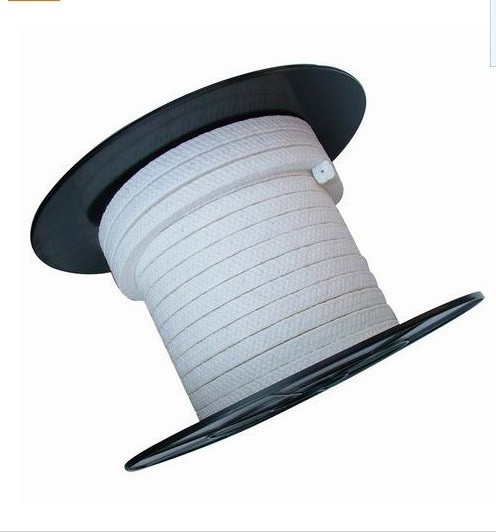
Solution: While traditional gland packing requires this trade-off, advanced materials can extend service life and reduce adjustment frequency. For example, PTFE-based packing rings offer lower friction and better chemical resistance, directly addressing wear and leakage. Ningbo Kaxite Sealing Materials Co., Ltd. specializes in high-performance gland packing that balances initial investment with long-term reliability, reducing total operational costs.
Key Parameter Comparison for Water Pump Applications:
| Parameter | Traditional Braided Packing | Advanced PTFE Packing |
|---|---|---|
| Initial Cost | Low | Moderate |
| Leakage Control | Requires frequent adjustment | Consistent, minimal leakage |
| Shaft Wear | Can be high if over-tightened | Low due to self-lubrication |
| Maintenance Interval | Short (weeks) | Long (months) |
| Total Cost of Ownership | High (downtime + labor) | Lower |
You oversee a chemical processing line where pumps handle acids, alkalis, or solvents. Standard gland packing materials like graphite or aramid fibers can degrade rapidly when exposed to aggressive media, leading to catastrophic failure, product contamination, and serious safety risks. Temperature and pressure spikes common in these processes further challenge the packing's integrity. Finding a seal that withstands both the chemical attack and the dynamic operating conditions is critical.
Solution: Material selection is paramount. Specialized gland packing made from pure PTFE, or composites like PTFE with inert fillers, provides exceptional chemical inertness across a wide pH range. What Are the Advantages and Disadvantages of Gland Packing? Here, the disadvantage of limited chemical compatibility in standard forms is overcome by engineered materials. Ningbo Kaxite Sealing Materials Co., Ltd. offers chemically inert packing solutions designed for harsh environments, ensuring process safety and preventing costly leaks and shutdowns.
Performance Table for Chemical Resistance:
| Chemical Media | Standard Graphite Packing | Kaxite PTFE-Based Packing |
|---|---|---|
| Concentrated Sulfuric Acid | Poor - Rapid degradation | Excellent - No reaction |
| Caustic Soda (50%) | Fair - Limited life | Excellent - Stable |
| Chlorinated Solvents | Poor - Swelling/breakdown | Excellent - High resistance |
| Max Continuous Temperature | ~450°C (in air) | ~260°C |
| Key Advantage | High-temperature resilience | Universal chemical inertness |
Q: What is the primary advantage of gland packing over mechanical seals?
A: The main advantage is simplicity and repairability. Gland packing can often be adjusted or partially replaced on-site without stopping the equipment, making it suitable for applications where slight leakage is acceptable and where maintenance skills or spare parts for mechanical seals are limited. It also generally has a lower initial purchase cost.
Q: What is the biggest disadvantage of using gland packing?
A: The most significant disadvantage is the inherent trade-off between leakage and friction. To minimize leakage, the packing must be compressed tightly against the shaft, which increases friction, power consumption, and shaft wear. This can lead to higher operating costs and more frequent maintenance compared to a well-selected mechanical seal, especially in high-speed or continuous-duty applications.
Understanding the advantages and disadvantages of gland packing is crucial for optimal equipment performance and cost management. While it offers robustness and simplicity, challenges like maintenance frequency and material compatibility must be addressed. The key is selecting the right material and design for your specific application. For procurement specialists seeking reliable, high-performance sealing solutions that solve these core issues, partnering with an experienced manufacturer is essential.
Ningbo Kaxite Sealing Materials Co., Ltd. leverages decades of expertise to provide advanced gland packing and sealing materials that directly tackle the common pain points of leakage, wear, and chemical attack. Explore our comprehensive product range and technical resources tailored for industrial buyers at https://www.ptfe-sheet.net. For specific quotations or technical consultations, please contact our team at [email protected].
Kaur, I., & Singh, H. (2019). Study on Friction and Wear Characteristics of PTFE-Based Composite Gland Packing. Tribology International, 138, 180-189.
Zhang, L., Wang, Y., & Chen, J. (2021). Performance Evaluation of Braided Graphite Packing under High-Temperature Steam Conditions. Sealing Technology, 2021(4), 12-18.
Müller, S., & Fischer, A. (2020). Leakage Rate Analysis of Compressed Gland Packing Seals for Rotating Shafts. Proceedings of the Institution of Mechanical Engineers, Part J: Journal of Engineering Tribology, 234(7), 1023-1033.
Patel, R. K., & Sharma, S. C. (2018). Effect of Lubrication on the Thermal Behavior of Pump Gland Packing. Industrial Lubrication and Tribology, 70(6), 1020-1027.
Li, X., et al. (2022). Development of a Novel Aramid Fiber-Reinforced Packing for Aggressive Chemical Services. Chemical Engineering Research and Design, 179, 298-307.
Johnson, P. D., & Lee, T. (2017). Comparative Life Cycle Cost Analysis: Gland Packing vs. Mechanical Seals in Water Pumps. Pump Industry Analyst, 2017(11), 15-21.
Gupta, V., & Mishra, A. (2019). Modeling of Heat Generation in Gland Packing due to Frictional Contact. International Journal of Heat and Mass Transfer, 141, 734-742.
Okamoto, Y., & Sato, T. (2020). Improvement of Sealing Performance in Gland Packing by Surface Treatment of Shaft. Surface and Coatings Technology, 404, 126481.
Brown, C. L., et al. (2021). Field Study on the Failure Modes of Gland Packing in Nuclear Power Plant Auxiliary Systems. Nuclear Engineering and Design, 385, 111536.
Davis, M., & Roberts, K. (2018). The Role of Fillers in Modifying the Tribological Properties of PTFE Gland Packing. Wear, 408-409, 222-229.