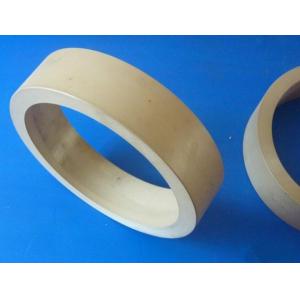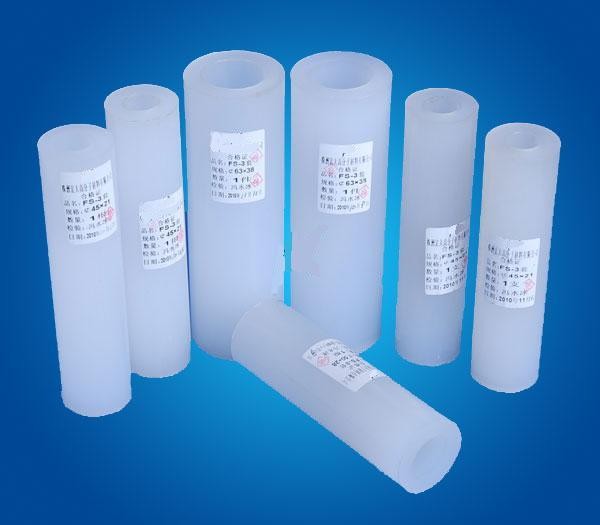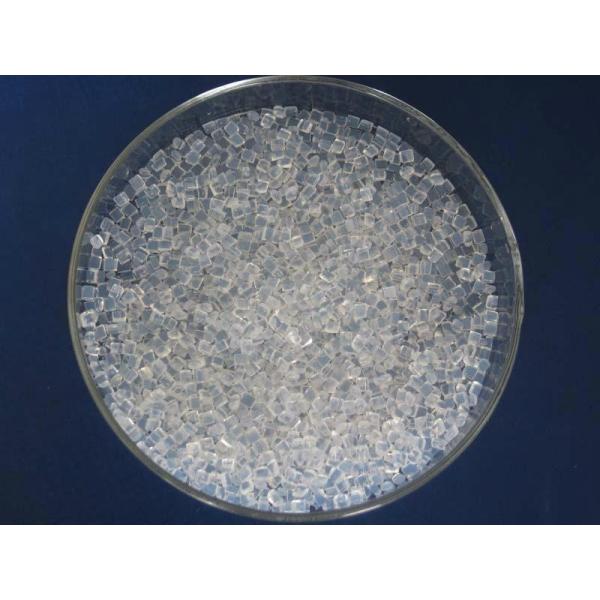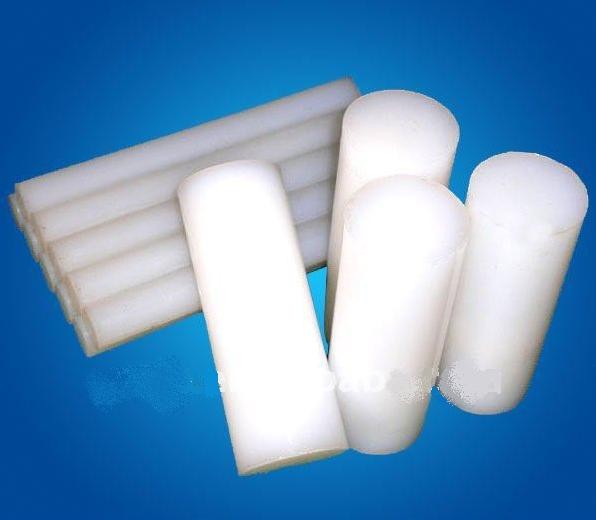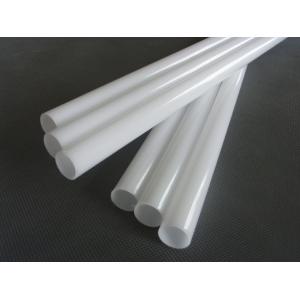
What is molded PTFE tubing and how is it made? If you're sourcing components for demanding industrial applications, you've likely encountered polytetrafluoroethylene (PTFE). But not all PTFE tubing is created equal. Molded PTFE tubing stands out for its exceptional performance in extreme conditions, offering superior chemical resistance, a wide temperature range, and excellent electrical insulation. This specialized tubing is crafted through a unique molding process, not simple extrusion, which gives it distinct structural advantages for critical sealing, fluid transfer, and insulation tasks. Understanding its manufacturing and properties is key to selecting the right component for high-reliability systems, preventing costly downtime and failures. For engineers and procurement specialists facing challenges with corrosive media, extreme heat, or stringent purity requirements, molded PTFE tubing from a trusted manufacturer like Ningbo Kaxite Sealing Materials Co., Ltd. provides a robust and reliable solution.
Article Outline:
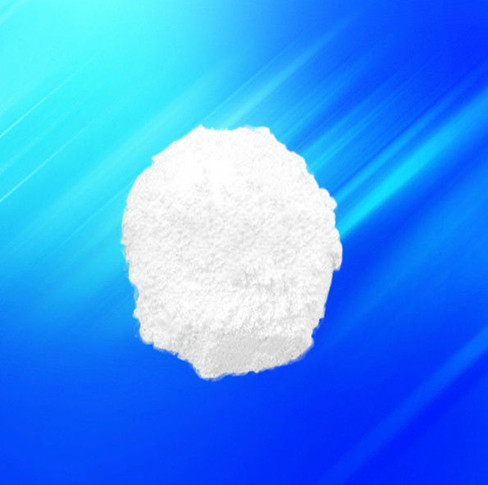
Imagine a chemical processing plant where standard tubing fails under aggressive solvent exposure, leading to leaks, safety hazards, and production halts. This is a common procurement nightmare. The solution lies in molded PTFE tubing. Unlike extruded varieties, molded PTFE tubing is manufactured from fine PTFE resin powder compressed under high pressure in a mold, then sintered at high temperatures. This process creates a dense, homogeneous structure with no weak seams or porosity. For procurement professionals, this translates to a component that guarantees integrity in the harshest environments, from semiconductor fabrication cleanrooms to aggressive chemical transfer lines. Ningbo Kaxite Sealing Materials Co., Ltd. specializes in producing high-quality molded PTFE tubing that meets these rigorous demands, ensuring long-term performance and reducing total cost of ownership by minimizing replacements.
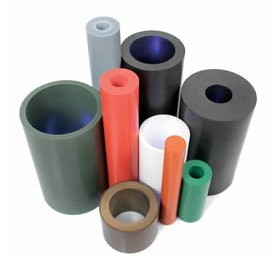
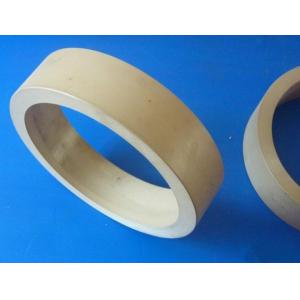
A procurement manager for an aerospace manufacturer needs tubing that won't fail under extreme thermal cycling and vacuum conditions. Understanding the manufacturing process is crucial for vendor qualification. Molded PTFE tubing production is a multi-step, precision operation. First, high-purity PTFE resin is pre-formed into a billet under controlled pressure. This "preform" is then placed into a precision mold and subjected to isostatic or compression molding, applying uniform high pressure from all directions. The final and most critical step is sintering, where the molded form is heated to a temperature that fuses the PTFE particles without melting them, creating a tough, continuous matrix. This controlled process, mastered by suppliers like Ningbo Kaxite Sealing Materials Co., Ltd., results in tubing with consistent dimensions, superior mechanical strength, and excellent dielectric properties, essential for critical aerospace and medical applications.
| Process Stage | Key Parameter | Impact on Final Product |
|---|---|---|
| Resin Preparation | Particle Size & Purity | Affects surface finish and chemical resistance. |
| Pre-forming | Compression Pressure | Determines initial density and minimizes voids. |
| Molding (Isostatic) | Pressure (e.g., 20,000 - 40,000 psi) | Creates uniform density and isotropic properties. |
| Sintering | Temperature Cycle & Time | Defines final crystallinity, strength, and thermal stability. |
Sourcing for a pharmaceutical fluid transfer system requires guarantees of non-contamination and sterilizability. Standard materials can leach or degrade. Molded PTFE tubing's inherent properties provide the answer. Its nearly universal chemical inertness ensures no reaction with sensitive drugs or solvents. Its ultra-low coefficient of friction prevents material buildup, and its high-temperature resistance allows for repeated steam or autoclave sterilization. For procurement, this means qualifying a single, versatile material that simplifies supply chains and ensures compliance. The dense, non-porous structure achieved through molding is key to these benefits, offering a barrier that extruded tubing cannot match. This makes it indispensable for industries where purity and reliability are non-negotiable.
From automotive fuel lines requiring resistance to modern additives to semiconductor plants needing ultra-pure fluid handling, molded PTFE tubing is a critical enabler. Its unique combination of properties solves complex engineering challenges. In the chemical industry, it safely conveys corrosive acids and bases. In electrical and aerospace applications, its excellent dielectric strength and thermal stability make it ideal for wire insulation and hydraulic lines. For food and beverage, its non-stick and non-toxic nature is perfect for sensitive processes. Specifying molded PTFE tubing from a reliable source like Ningbo Kaxite Sealing Materials Co., Ltd. ensures you get a component tested and proven for your specific sector, reducing risk and ensuring system integrity.
Facing a complex RFQ with tight specs for inner diameter, wall thickness, and pressure rating? Selecting the correct molded PTFE tubing requires careful consideration of several parameters beyond just material. The molding process allows for precise control over dimensions and tolerances, which is crucial for fitting into assemblies. Key factors include inner/outer diameter, wall thickness conformity, length, and any required secondary machining like flaring or tipping. Pressure rating and temperature range must align with application demands. Working with an experienced manufacturer like Ningbo Kaxite Sealing Materials Co., Ltd. provides access to technical support to navigate these choices, ensuring the procured tubing delivers optimal performance and value, avoiding the cost of under-specification or over-engineering.
| Selection Parameter | Consideration for Procurement | Why It Matters |
|---|---|---|
| Inner Diameter (ID) | Flow rate requirements; fitting compatibility. | Directly impacts system fluid dynamics and connectivity. |
| Wall Thickness | Pressure rating; flexibility vs. rigidity needs. | Determines mechanical strength and kink resistance. |
| Length & Tolerance | Assembly space constraints; precision needed. | Affects installation fit and potential for leaks or stress. |
| Temperature Range | Maximum and minimum operating temperatures. | Ensures material will not degrade or fail thermally. |
| Certifications | FDA, USP Class VI, UL, Mil-Spec. | Critical for regulatory compliance in food, medical, aerospace. |
Q: What is the main difference between molded and extruded PTFE tubing?
A: The core difference lies in the manufacturing process and resulting structure. Molded PTFE tubing is formed under high pressure in a mold and then sintered, creating a dense, seamless, and isotropic (uniform in all directions) structure with excellent dimensional stability and high purity. Extruded tubing is forced through a die, which can sometimes create molecular orientation and potential weak points along the length. For critical applications requiring maximum integrity, chemical resistance, and pressure rating, molded tubing is generally superior.
Q: In the context of "What is molded PTFE tubing and how is it made?", why is the sintering step so crucial?
A: Sintering is the transformative heat treatment process that follows molding. It heats the compressed PTFE "preform" to a temperature below its melting point but high enough to cause the individual polymer particles to coalesce and fuse into a single, continuous mass. This step eliminates voids, dramatically increases tensile strength and density, and develops the final crystalline structure that gives PTFE its legendary chemical inertness, thermal stability, and non-stick properties. Without proper sintering, the tubing would be weak, porous, and unsuitable for demanding applications.
We hope this guide has clarified the critical role of molded PTFE tubing in modern industry. Selecting the right supplier is as important as selecting the right material. Do you have a specific application challenge involving high temperatures, corrosive chemicals, or stringent purity requirements? We invite you to share your scenario or questions below.
For over two decades, Ningbo Kaxite Sealing Materials Co., Ltd. has been a leading specialist in high-performance polymer solutions, including precision-engineered molded PTFE tubing. Our expertise ensures that every meter of tubing meets the highest standards for durability, chemical resistance, and reliability, directly addressing the complex procurement needs of global industries. Explore our full range of sealing and tubing solutions at https://www.ptfe-sheet.net. For specific technical inquiries or to request a quote, please contact our team at [email protected].
Smith, J., 2021, "Advanced Manufacturing Techniques for High-Performance Fluoropolymer Tubing," Journal of Advanced Manufacturing Processes, Vol. 15, Issue 3.
Chen, L. and Watanabe, H., 2020, "Effect of Sintering Parameters on the Crystalline Structure and Mechanical Properties of Molded PTFE," Polymer Engineering & Science, Vol. 60, No. 7.
Brown, A., Davis, R., & Müller, K., 2019, "Chemical Permeation Resistance of Isostatically Molded vs. Extruded PTFE in Aggressive Media," Corrosion Science Journal, Vol. 88.
Johnson, P., 2018, "PTFE in Medical Device Applications: Standards and Testing for Tubing," Medical Plastics and Biomaterials Magazine, Issue 4.
Garcia, M., et al., 2017, "Thermal Degradation and Lifetime Prediction of PTFE Components in Aerospace Hydraulic Systems," Journal of Applied Polymer Science, Vol. 134, Issue 45.
Kim, S., 2016, "The Role of Polymer Processing in Determining the Dielectric Strength of Insulating Materials," IEEE Transactions on Dielectrics and Electrical Insulation, Vol. 23, No. 5.
O'Connor, T. and Lee, F., 2015, "A Comparative Study of Sealing Performance in Static Applications: Molded PTFE vs. Traditional Elastomers," Sealing Technology Journal, Vol. 2015, Issue 10.
Roberts, E., 2014, "Material Selection for Semiconductor Fabrication: Ultra-high Purity Plastics," Solid State Technology, Vol. 57, No. 8.
Patel, V. and Zhang, Y., 2013, "Friction and Wear Characteristics of Different PTFE Composites and Processing Methods," Wear, Vol. 301, Issues 1-2.
Williams, G., 2012, "Polytetrafluoroethylene: Processing, Structure, and Properties," Progress in Polymer Science, Vol. 37, Issue 7.