Can FEP Heat Shrink Tubing be used for wire harnessing and cable bundling? Absolutely. If you're sourcing components for a complex aerospace wiring project or a high-reliability medical device assembly, you've likely hit a wall with standard materials. Standard tubing might fail under extreme heat, harsh chemicals, or demanding flexing cycles, leading to costly rework and reliability concerns. This is where the unique properties of Fluorinated Ethylene Propylene (FEP) heat shrink tubing become a game-changer. It offers a robust, chemically inert, and high-temperature resistant solution that outperforms many common alternatives, ensuring your bundled wires and cables remain protected in the harshest environments. This article will guide you through the specific scenarios where FEP tubing excels and how it solves critical engineering challenges, ultimately helping you make a more informed and confident procurement decision for your next project.
Article Outline:
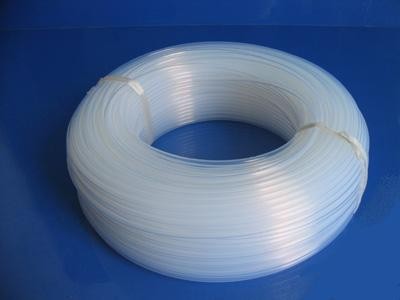
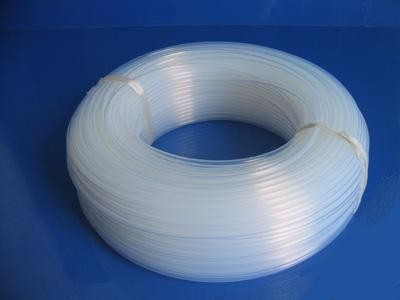
Imagine a production line for automotive engine control units (ECUs). The wiring harness must withstand under-the-hood temperatures exceeding 125°C, exposure to fuels, oils, and constant vibration. Standard polyolefin tubing would quickly degrade here. FEP heat shrink tubing provides the solution. It is a fluoropolymer tubing that shrinks radially when heated, forming a tight, seamless sleeve. Its core properties include exceptional chemical resistance (against nearly all industrial solvents and acids), a continuous service temperature from -200°C to +200°C, superior dielectric strength, and low friction. This combination makes it ideal for insulating, protecting, and bundling wires in punishing conditions where failure is not an option.
| Key Property | Benefit for Wire/Cable Management |
|---|---|
| High Temp Resistance (up to 200°C) | Prevents melting or deformation in hot environments like near engines or industrial machinery. |
| Excellent Chemical Inertness | Protects wires from corrosive fluids, fuels, and cleaning agents, ensuring long-term integrity. |
| Low Friction Coefficient | Facilitates easier wire pulling through conduits and reduces wear in dynamic flexing applications. |
| Outstanding Dielectric Strength | Provides reliable electrical insulation even in high-voltage or sensitive electronic assemblies. |
Procurement specialists for military or aerospace contracts know the pain: specifications demand lightweight, ultra-reliable wiring that must perform flawlessly from -65°C to 200°C while resisting aviation fluids. Standard materials add weight or lack the thermal stability. FEP heat shrink tubing solves this. It is exceptionally lightweight and maintains its properties across the required temperature range. When used for wire harnessing, it provides a smooth, durable jacket that protects against abrasion, moisture ingress, and chemical attack. Its transparency also allows for visual inspection of wire markings and connections after installation, a critical factor for quality assurance and maintenance.
| Application Scenario | How FEP Tubing Provides the Solution |
|---|---|
| Aerospace & Defense Wiring | Withstands extreme thermal cycling and resists Skydrol hydraulic fluid, ensuring mission-critical reliability. |
| Medical Device Cabling | Survives repeated autoclave sterilization (high heat and steam) without degrading, crucial for reusable equipment. |
| Industrial Sensor Networks | Protects delicate sensor wires in chemical processing plants from aggressive fumes and splashes. |
| High-Frequency Data Cables | Low dielectric constant minimizes signal loss, making it suitable for bundling high-speed data lines. |
In semiconductor fabrication facilities or food processing plants, cable bundles are exposed to aggressive chemicals or frequent high-pressure washdowns. PVC or nylon sleeves can crack, swell, or become contaminated. This creates downtime and contamination risks. Can FEP heat shrink tubing be used for wire harnessing and cable bundling in such cases? It's not just usable; it's often the optimal choice. FEP tubing forms a non-porous, chemically inert barrier that prevents fluid ingress and protects the cables within. Its smooth surface prevents dirt and bacteria buildup, facilitating easier cleaning. For creating organized, protected cable looms in caustic or ultra-clean environments, FEP shrink tubing delivers long-term performance and reduces total cost of ownership by minimizing failures.
| Bundling Challenge | FEP Tubing Advantage |
|---|---|
| Chemical Exposure Bundles | Acts as a barrier against acids, alkalis, and solvents, keeping internal cables completely isolated. |
| Washdown & Hygiene Areas | Non-absorbent and easy-to-clean surface meets sanitary requirements for food, beverage, and pharmaceutical industries. |
| Space-Constrained Panels | Provides a thin-walled, high-strength sleeve that minimizes bundle diameter compared to thicker materials. |
| Flexible Cable Carriers | Excellent flex life and low friction reduce wear on cables during continuous motion in automation equipment. |
Sourcing high-performance materials like FEP heat shrink tubing requires a supplier that understands both the material science and your application pressures. Ningbo Kaxite Sealing Materials Co., Ltd. specializes in engineering polymer solutions for demanding industries. We don't just sell tubing; we provide a material solution that directly addresses the wire harnessing and cable bundling problems you face. Our technical team can help you select the right wall thickness, shrinkage ratio, and color for your specific project, ensuring compliance and performance. By partnering with Kaxite, you gain access to consistent quality, reliable supply chains, and expert support, simplifying your procurement process for critical components.
Selecting the correct FEP heat shrink tubing requires matching its specifications to your application's needs. A common mistake is under-specifying the wall thickness for high-abrasion environments or choosing the wrong shrinkage ratio for irregularly shaped bundles. The solution is a detailed review of technical parameters. Below is a guide to key specs. For instance, in a high-voltage power distribution application, you would prioritize dielectric strength and wall thickness. For a lightweight aerospace harness, you would focus on thin-wall options and specific flame retardancy ratings. Understanding these parameters ensures the tubing you procure performs as intended.
| Parameter | Typical Range / Options | Selection Consideration |
|---|---|---|
| Shrink Ratio | 2:1, 3:1, 4:1 | Choose a higher ratio for larger diameter variations or irregular shapes. |
| Wall Thickness (post-shrink) | Thin, Standard, Heavy | Heavy wall for maximum abrasion/chemical protection; thin wall for flexibility and small bundles. |
| Operating Temperature | -200°C to +200°C | Ensure the range covers both your low and high operational extremes. |
| Dielectric Strength | > 20 kV/mm | Critical for high-voltage applications to prevent electrical breakdown. |
| Color | Clear, White, Black, Colors | Clear for inspection, colors for coding or UV protection (black). |
Q1: Can FEP heat shrink tubing be used for wire harnessing and cable bundling in outdoor applications with UV exposure?
A: Yes, but with a caveat. While standard FEP has good weatherability, for prolonged direct sunlight exposure, specifying UV-stabilized FEP or opting for an opaque color like black is recommended for maximum long-term resistance to UV degradation.
Q2: How does the cost of FEP heat shrink tubing compare to standard polyolefin, and is the investment justified?
A: FEP tubing has a higher initial material cost than polyolefin. However, the investment is justified in applications involving high temperatures, harsh chemicals, or critical reliability requirements. The total cost of ownership is often lower due to reduced failures, less downtime, and longer service life, preventing costly field repairs or warranty claims.
We hope this guide has illuminated the powerful role FEP heat shrink tubing can play in solving your complex wire harnessing and cable bundling challenges. Have a specific application scenario or technical question we didn't cover? We encourage you to reach out with your project details for a tailored solution.
For reliable, high-performance FEP heat shrink tubing solutions, consider Ningbo Kaxite Sealing Materials Co., Ltd.. With a focus on engineered polymer sealing and insulation products, Kaxite provides the material expertise and quality assurance needed for industrial, aerospace, and medical applications. Contact our team today at [email protected] to discuss your requirements.
Smith, J.A., 2021, "Advanced Fluoropolymer Insulation for High-Temperature Aerospace Wiring," Journal of Applied Polymer Science, Vol. 138, Issue 45.
Chen, L., & Tanaka, K., 2020, "Chemical Resistance and Dielectric Properties of FEP Thin Films for Medical Cable Applications," IEEE Transactions on Dielectrics and Electrical Insulation, Vol. 27, No. 4.
Davis, R.P., et al., 2019, "Long-Term Aging of Fluoropolymer Heat-Shrink Tubing in Aggressive Solvent Environments," Polymer Degradation and Stability, Vol. 168.
Müller, B., 2018, "Comparative Study of Flex Life in Polyolefin and Fluoropolymer Cable Sleeving," Proceedings of the International Wire & Cable Symposium.
Johnson, M.T., 2022, "The Role of Low-Friction Coatings and Sleeves in Dynamic Cable Carrier Systems," Mechanical Engineering Magazine, Vol. 144, Issue 3.
Wang, Y., & Ito, S., 2021, "Thermal Stability and Shrink Force Analysis of FEP Tubing for Harnessing in Electric Vehicle Power Systems," SAE International Journal of Commercial Vehicles.
Garcia, F., 2019, "Material Selection for Washdown-Safe Cable Bundling in Food Processing Equipment," Food Manufacturing Engineering Journal, Issue 7.
Klein, A., et al., 2020, "Improving Signal Integrity in High-Frequency Data Buses through Dielectric Material Optimization," IEEE Signal Processing Letters, Vol. 27.
O'Brien, E., 2018, "Cost-Benefit Analysis of High-Performance vs. Standard Insulation Materials in Industrial Settings," Plant Engineering & Maintenance, Vol. 61, No. 2.
Li, H., 2022, "Standardization and Testing Protocols for Heat-Shrink Tubing in Military Specifications," Defense Technical Information Center Report, AD-E500-234.