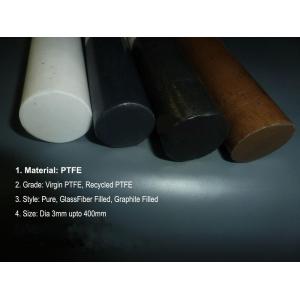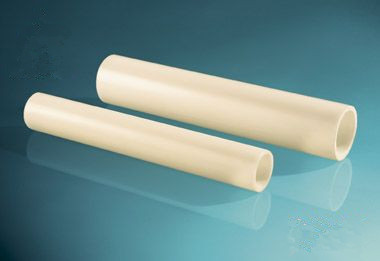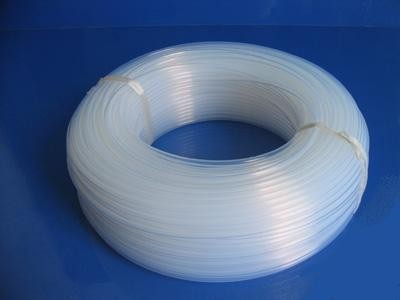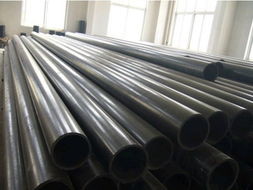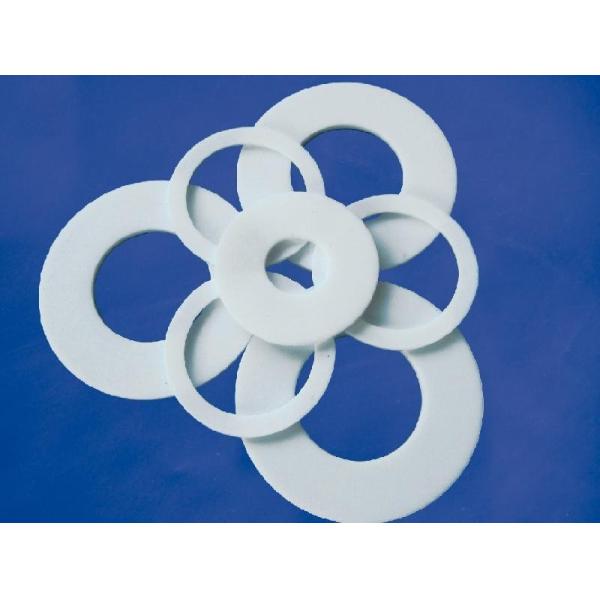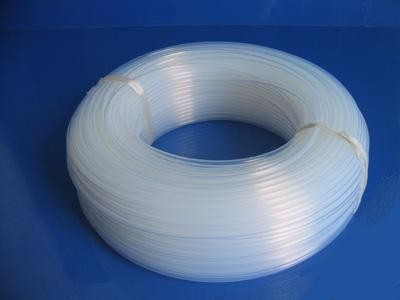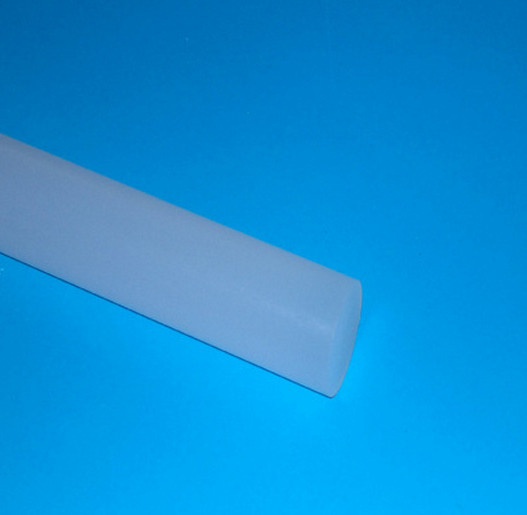
In which industries are Filled PTFE Tubes most commonly used? If you're sourcing components, you know that finding materials that combine performance, durability, and cost-effectiveness is a constant challenge. Filled PTFE tubes are not your average plastic tubing; they are engineering marvels created by infusing pure PTFE with materials like glass, carbon, or bronze. This enhancement transforms them into powerful solutions for extreme environments where standard materials fail. From battling corrosive chemicals to withstanding intense friction and high temperatures, these tubes are the unsung heroes in critical applications. Their unique properties make them indispensable across several demanding sectors. For sourcing professionals, understanding where these tubes excel is key to specifying the right component and avoiding costly downtime or failures. This guide will explore the primary industries leveraging filled PTFE tubes, highlighting common pain points and how high-quality solutions, like those from Ningbo Kaxite Sealing Materials Co., Ltd., provide reliable answers.
Article Outline:
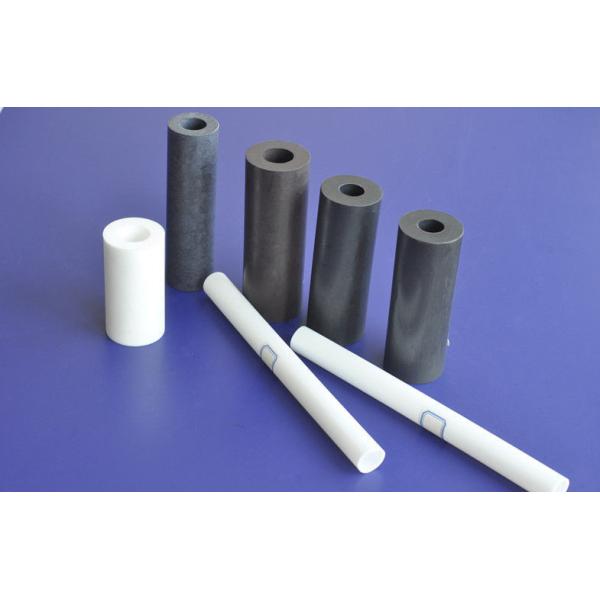
Imagine a chemical plant where aggressive acids, solvents, and reactive compounds flow through transfer lines daily. Standard metal tubing corrodes, leading to leaks, product contamination, and hazardous situations. Similarly, in pharmaceutical manufacturing, any trace contamination can ruin an entire batch of life-saving drugs. This is the critical pain point: maintaining integrity in highly corrosive and sterile environments.
Filled PTFE tubes, particularly those with glass or carbon fillers, provide the ultimate solution. The inert nature of PTFE resists almost all chemicals, while the fillers dramatically improve the tube's mechanical strength, creep resistance, and dimensional stability. This means no corrosion, no leaching of contaminants, and reliable performance under thermal cycling.
For procurement specialists, specifying the right filled PTFE tube here prevents catastrophic failure. Ningbo Kaxite Sealing Materials Co., Ltd. offers tubes engineered for these extremes, ensuring system safety and longevity.
| Key Parameter | Importance for Chemical/Pharma |
|---|---|
| Chemical Compatibility | Resistance to a vast range of acids, bases, and solvents. |
| Purity & Non-contamination | Prevents leaching, ensuring product integrity. |
| Pressure & Temperature Rating | Withstands process variations without degrading. |
| Creep Resistance | Maintains seal and shape under constant load. |
Engine compartments and aircraft systems are brutal environments. Components face extreme heat from engines, exposure to aggressive fuels and oils, and constant vibration. Traditional rubber seals degrade quickly, leading to fluid leaks, loss of pressure, and potential system failures. The need is for lightweight, durable materials that perform reliably under stress and wide temperature ranges.
Filled PTFE tubes excel as liner materials for fuel lines, hydraulic lines, and air systems. Bronze or carbon-filled PTFE offers excellent wear resistance and low friction, which is perfect for dynamic seal applications. Their light weight contributes to overall vehicle or aircraft efficiency without compromising on performance.
By choosing precision-engineered filled PTFE tubing from a reliable supplier like Ningbo Kaxite Sealing Materials Co., Ltd., engineers solve durability issues, reduce maintenance intervals, and enhance system reliability.
| Key Parameter | Importance for Auto/Aerospace |
|---|---|
| Temperature Range | Operates from cryogenic to high heat (-200°C to +260°C). |
| Low Friction Coefficient | Reduces wear in dynamic applications, improving lifespan. |
| Fluid Resistance | Impervious to fuels, oils, and hydraulic fluids. |
| Weight | Lightweight, aiding in fuel efficiency and design. |
In food and beverage plants, hygiene is non-negotiable. Tubes carrying ingredients, dairy, or beverages must prevent bacterial growth, withstand frequent cleaning with steam or caustic cleaners, and not impart any taste or odor. Plasticizers or additives leaching from inferior tubing can compromise product safety and violate strict FDA or EU regulations.
Filled PTFE tubes, especially glass-filled grades, are the gold standard. PTFE is inherently non-stick and non-porous, making it easy to clean and sterilize. The filler adds structural rigidity for reliable connections. They ensure product purity from the mixing vat to the packaging line.
For buyers, this translates to compliance assurance and reduced risk of product recalls. Sourcing from a certified manufacturer like Ningbo Kaxite Sealing Materials Co., Ltd. guarantees materials that meet food-grade standards.
| Key Parameter | Importance for Food & Beverage |
|---|---|
| FDA/EU Compliance | Certified safe for contact with consumables. |
| Non-stick Surface | Prevents residue buildup, enabling easy cleaning. |
| Steam Sterilization Capability | Withstands repeated SIP (Steam-in-Place) cycles. |
| Taste & Odor Neutral | Ensures product flavor remains unaffected. |
Semiconductor fabrication is a realm of microscopic precision. The process gases and ultra-pure chemicals used are extremely aggressive and any particulate or metallic ion contamination from tubing can destroy millions of dollars worth of silicon wafers. Outgassing from tubing materials is another critical concern, as it can deposit films on delicate circuits.
High-purity filled PTFE tubes, with specialized fillers, provide the necessary stability and purity. They offer excellent resistance to plasma and reactive gases used in etching and deposition chambers. Their thermal stability prevents deformation in heated zones.
Procurement teams for fabs prioritize vendors who understand these critical needs. Ningbo Kaxite Sealing Materials Co., Ltd. provides tubes manufactured in controlled environments to minimize contaminants, directly addressing the yield-protection pain point.
| Key Parameter | Importance for Semiconductor |
|---|---|
| Ultra-high Purity | Low extractables and leachables to prevent wafer contamination. |
| Low Outgassing | Minimizes volatile emissions in vacuum environments. |
| Plasma Resistance | Withstands corrosive process environments. |
| Dimensional Stability | Maintains precise tolerances under thermal stress. |
Heavy machinery in manufacturing, printing, or packaging subjects components to constant movement, high loads, and abrasive conditions. Hydraulic systems, piston rings, and bearing liners made from soft metals or standard polymers wear out quickly, causing leaks, loss of precision, and unplanned downtime for repairs.
This is where bronze or carbon-filled PTFE tubes show their strength as liner materials or composite parts. The fillers significantly enhance the wear resistance and compressive strength of PTFE, while retaining its legendary low friction. This combination reduces energy consumption, extends service life, and improves machinery uptime.
Identifying this application need allows buyers to source a multifunctional material that solves several problems at once. Ningbo Kaxite Sealing Materials Co., Ltd. offers a range of filled PTFE formulations tailored to specific wear and load requirements.
| Key Parameter | Importance for Industrial Machinery |
|---|---|
| Wear Resistance (PV Limit) | Withstands high pressure and velocity without rapid wear. |
| Low Friction | Reduces power loss and heat generation. |
| Compressive Strength | Handles high loads without permanent deformation. |
| Durability | Long service life reduces maintenance costs and downtime. |
Q: In which industries are Filled PTFE Tubes most commonly used for high-temperature applications?
A: They are prevalent in the automotive and aerospace industries for fuel and hydraulic lines, and in chemical processing for hot fluid transfer, where temperatures can exceed 200°C. Their stability under thermal stress makes them ideal for these sectors.
Q: In which industries are Filled PTFE Tubes most commonly used to solve purity and contamination issues?
A: The pharmaceutical, food & beverage, and semiconductor manufacturing industries rely heavily on them. Their inert, non-leaching, and easy-to-clean properties are critical for maintaining sterile conditions and preventing product contamination in these highly regulated fields.
Selecting the right filled PTFE tube is a strategic decision that impacts operational efficiency, safety, and cost. Whether you're battling corrosion, seeking purity, or demanding durability, understanding these key applications is the first step. Have you encountered a specific sealing or tubing challenge in your industry? We'd love to hear about your application requirements.
For reliable, high-performance solutions, consider Ningbo Kaxite Sealing Materials Co., Ltd., a specialist in advanced sealing materials. We provide a wide range of filled PTFE tubes engineered to meet the rigorous demands of various industries, helping you solve complex material challenges. Learn more about our products and expertise on our website at https://www.ptfe-sheet.net. For specific inquiries, please contact us via email at [email protected].
Kalpakjian, S., & Schmid, S. R. (2014). Manufacturing Engineering and Technology. Prentice Hall. 7th Edition.
Bhushan, B. (2013). Principles and Applications of Tribology. John Wiley & Sons. 2nd Edition.
Ebnesajjad, S. (2011). Fluoroplastics, Volume 2: Melt Processible Fluoropolymers. William Andrew Publishing.
Drobny, J. G. (2009). Technology of Fluoropolymers. CRC Press. 2nd Edition.
Scheirs, J. (2009). Modern Fluoropolymers: High Performance Polymers for Diverse Applications. John Wiley & Sons.
Hougham, G., Cassidy, P. E., Johns, K., & Davidson, T. (Eds.). (1999). Fluoropolymers 1: Synthesis. Springer Science & Business Media.
Feiring, A. E., et al. (1996). Novel Aromatic Polymers with Low Dielectric Constants. Macromolecules, 29(4), 1091-1098.
Gangal, S. V. (1989). Polytetrafluoroethylene. In Encyclopedia of Polymer Science and Engineering (Vol. 16, pp. 577-600). John Wiley & Sons.
Sherratt, S. (1966). The Chemistry of Polytetrafluoroethylene. In Fluorine Chemistry Reviews (Vol. 1, pp. 157-226).
Bunn, C. W., & Howells, E. R. (1954). Structures of Molecules and Crystals of Fluorocarbons. Nature, 174(4433), 549-551.